At first glance, a coil resembles a spring-like structure made by winding metal wire into a helix. The center of the coil can be hollow or filled with a high-permeability magnetic material to concentrate the magnetic field closer to the coil. Coils are widely used in transformers, common-mode inductors, differential-mode inductors, and motors. When current flows through a coil, it generates a magnetic field whose strength is proportional to the magnitude of the current.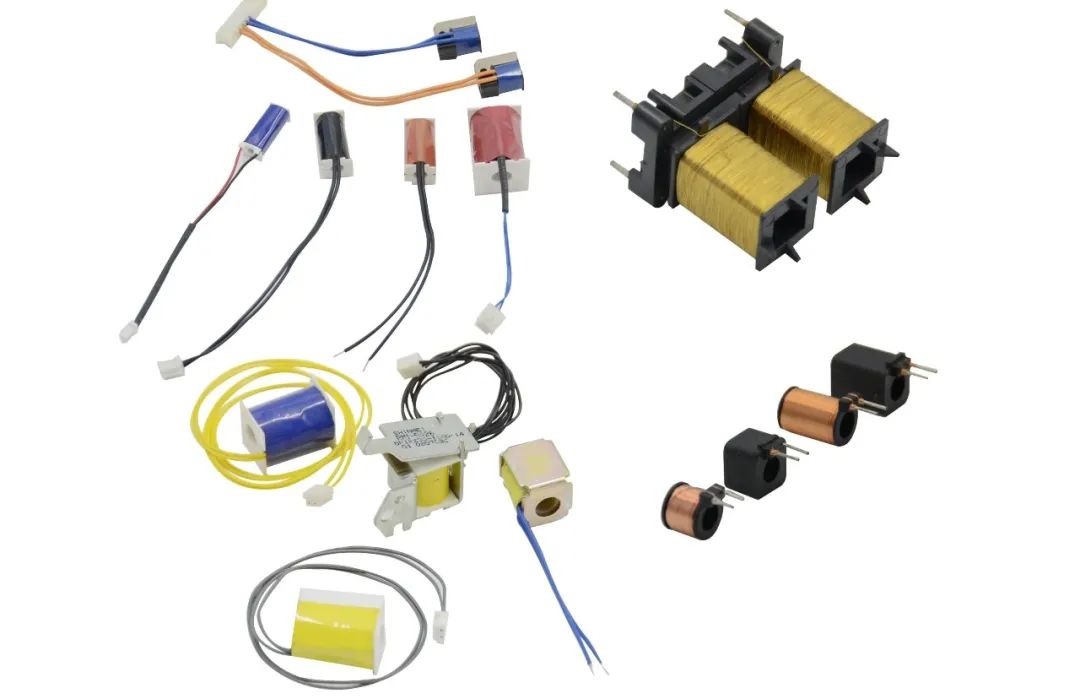
When a circuit is switched on, the current does not instantly stabilize because the magnetic field generated by the current creates an opposing force that resists further increases in current. This phenomenon is known as inductance. Inductance is just one of many functions of coils. Depending on its application, a coil may also serve electromagnetic, electrothermal, or discharge functions, among others. Below, we analyze how coils with different functions are classified as commodities.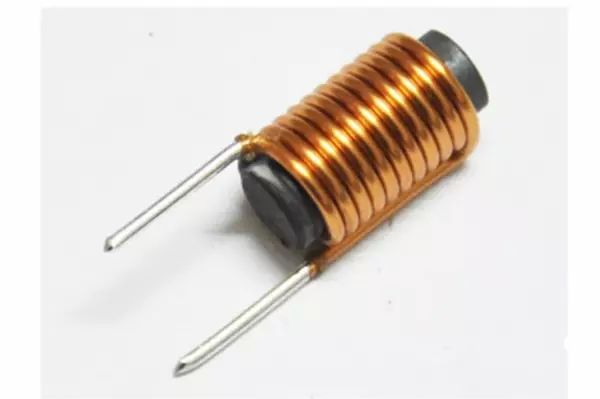
A transformer typically consists of two or more insulated wire coils wound around a laminated iron core. An alternating current (AC) in one coil (primary circuit) induces another AC with different current and voltage values in the other coil(s) (secondary circuit). The primary coil (high-voltage side) and secondary coil (low-voltage side) together form the main structure of the transformer.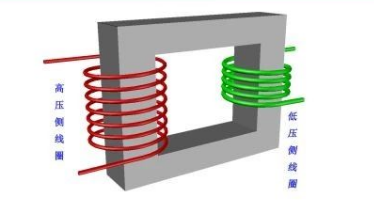
What distinguishes the primary and secondary coils? Physically, they appear similar. The coil connected to the power source is called the primary coil, while the coil connected to the load is called the secondary coil. In physics, a load refers to a device in a circuit that converts electrical energy into other forms of energy, such as an electric furnace converting electrical energy into heat or an electric motor converting electrical energy into mechanical energy. Transformers fall under HS Code 8504.
If a single coil has both primary and secondary coil functionalities, it is still classified as a transformer. Otherwise, it is categorized as an inductor under HS Code 8504.5000. Transformer models encode specific characteristics, including phase number, insulation type, cooling method, voltage regulation, winding conductor material, design sequence, rated capacity, and high-voltage winding voltage level. Each letter in the model code has a specific meaning.
Current Transformer (CT): Similar to a transformer, a current transformer operates based on electromagnetic induction principles. It converts a large primary-side current into a smaller secondary-side current for measurement. The primary winding has few turns and carries the entire line current, while the secondary winding has many turns and connects to measuring instruments and protection circuits. During operation, the secondary circuit must remain closed (never open-circuited), ensuring low impedance and approximating a short-circuit state.
Classification Decision:
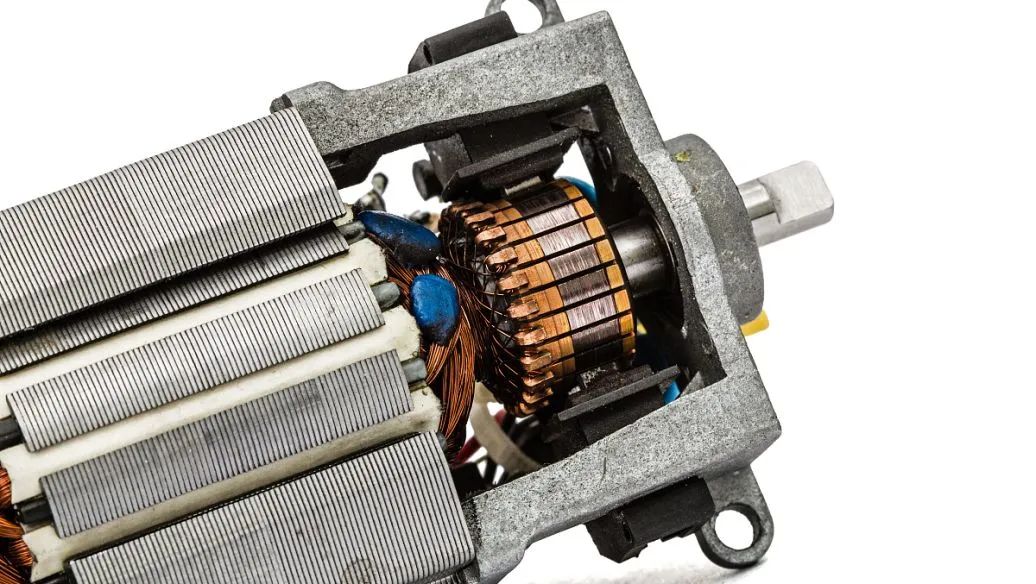
Based on electromagnetic induction principles, when a varying current flows through a coil, magnetic flux lines pass through the coil's center. The faster the current changes, the more magnetic flux lines are generated. Excitation coils function similarly to electromagnets, producing magnetic fields in devices like rotary generators. In rotating machines, excitation coils are wound around ferromagnetic cores, which consist of a stationary stator and a rotating rotor. Magnetic flux lines form continuous loops passing through the stator and rotor, creating a magnetic field. Such coils, which generate electromagnetic fields when energized, may be classified under HS Code 8505909090.
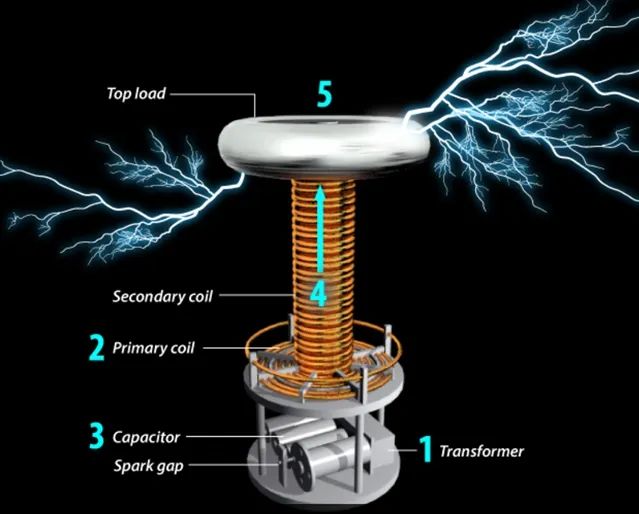
A Tesla coil is a distributed-parameter, high-frequency series resonant transformer capable of generating millions of volts of high-frequency voltage. Colloquially, it is referred to as an artificial lightning generator. Enthusiasts worldwide have built various devices to create dazzling artificial lightning displays.
The principle involves stepping up ordinary voltage using a transformer, followed by discharging through two coupled coils. A Tesla coil comprises two circuits coupled via coils. First, the capacitor (C1) charges until its voltage exceeds the spark gap threshold, causing the gap to break down and form a circuit through the primary coil (L1). Energy oscillates between C1 and L1 and couples to the secondary coil, which acts as an inductor. The top terminal (C2) and ground form an equivalent capacitance, leading to LC oscillation. When resonance occurs, energy transfers from the primary to the secondary circuit, increasing the voltage at the discharge terminal until discharge occurs.
Tesla coils can also enable wireless energy transmission, similar to modern wireless phone charging. For example, placing a phone on a wireless charging pad completes the charging process. Customs authorities have issued classification decisions for such wireless charging devices.
Classification Decision:
Heating coils, also known as induction heating coils, use electromagnetic induction to heat materials. A metal workpiece is placed inside the coil, and alternating current (typically medium or high frequency, 900 Hz–300 kHz or higher) generates an alternating magnetic field. This induces a current of the same frequency in the metal, producing Joule heating. Induction heating furnaces are classified under HS Code 8514.2, while other induction heating equipment falls under HS Code 8514.4.
Through the principles of inductance, electromagnetism, discharge, and heating, this article explores the classification of coils in various applications. Additional tax codes for coil-related products are listed in the table below for reference.