In modern power systems, transformers are essential devices used for voltage conversion, electrical isolation, and energy transmission. Depending on the type of input and output power supply, transformers can be divided into two main categories: single-phase transformers and three-phase transformers.
This article provides a detailed introduction to single-phase transformers, including their definition, basic structure, working principle, common applications, and an analysis of their advantages and limitations. It aims to help readers gain a comprehensive understanding of this fundamental yet crucial electrical equipment.
A single-phase transformer is a device designed to operate in a single-phase AC power system. It transfers energy through a single alternating voltage waveform. These transformers are typically used in low-power applications such as residential power distribution, small electrical appliances, lighting circuits, and elevator control systems where high continuity of power supply is not required.
The basic functions of a single-phase transformer include:

A single-phase transformer mainly consists of the following core components:
The core forms the magnetic circuit of the transformer and is usually made from stacked silicon steel laminations with high magnetic permeability. This design minimizes eddy current and hysteresis losses. There are two main types of core structures:
The windings are responsible for energy transfer and are generally categorized into:
Windings are typically made of copper or aluminum wire and are insulated using materials like paper, varnish, or resin to prevent short circuits.
To ensure electrical isolation between the high and low voltage windings and between the windings and the core, various insulation materials are used, such as pressboard, insulating varnish, and epoxy resins.
Dry-type transformers often come with protective enclosures and cooling fins, while oil-immersed transformers include components like tanks, cooling tubes, and breathers to provide both insulation and heat dissipation.
The operation of a single-phase transformer is based on Faraday’s Law of Electromagnetic Induction. When an alternating current flows through the primary winding, it generates a varying magnetic flux in the core. This flux links with the secondary winding and induces an electromotive force (EMF), enabling voltage transformation.
Let be the number of turns in the primary winding and be the number of turns in the secondary winding. The voltage relationship is given by:
If , the output voltage is higher than the input voltage — this is called a step-up transformer.
If , the output voltage is lower — this is referred to as a step-down transformer.
Depending on classification criteria, single-phase transformers can be categorized as follows:
| Classification Basis | Types |
|---|---|
| By Application | Distribution, Instrument, Isolation, Test Transformers |
| By Cooling Method | Dry-Type (Air-Cooled), Oil-Immersed (Oil-Cooled) |
| By Installation | Pole-Mounted, Pad-Mounted, Indoor, Outdoor |
| By Functional Features | Standard, Explosion-Proof, Waterproof, Autotransformer |
Due to its simple structure and relatively low cost, the single-phase transformer is widely used in the following fields:
Used to step down high-voltage transmission lines to household voltages such as 220V or 110V.
Single-phase transformers are commonly used to supply isolated power for brakes, door drives, and control circuits in elevators.
Widely used in commercial buildings and street lighting to provide safe and stable voltage for lamps.
Applied in machine tool controls, automation instruments, and small motor drives.
Some medical devices use isolation transformers to ensure operator safety.
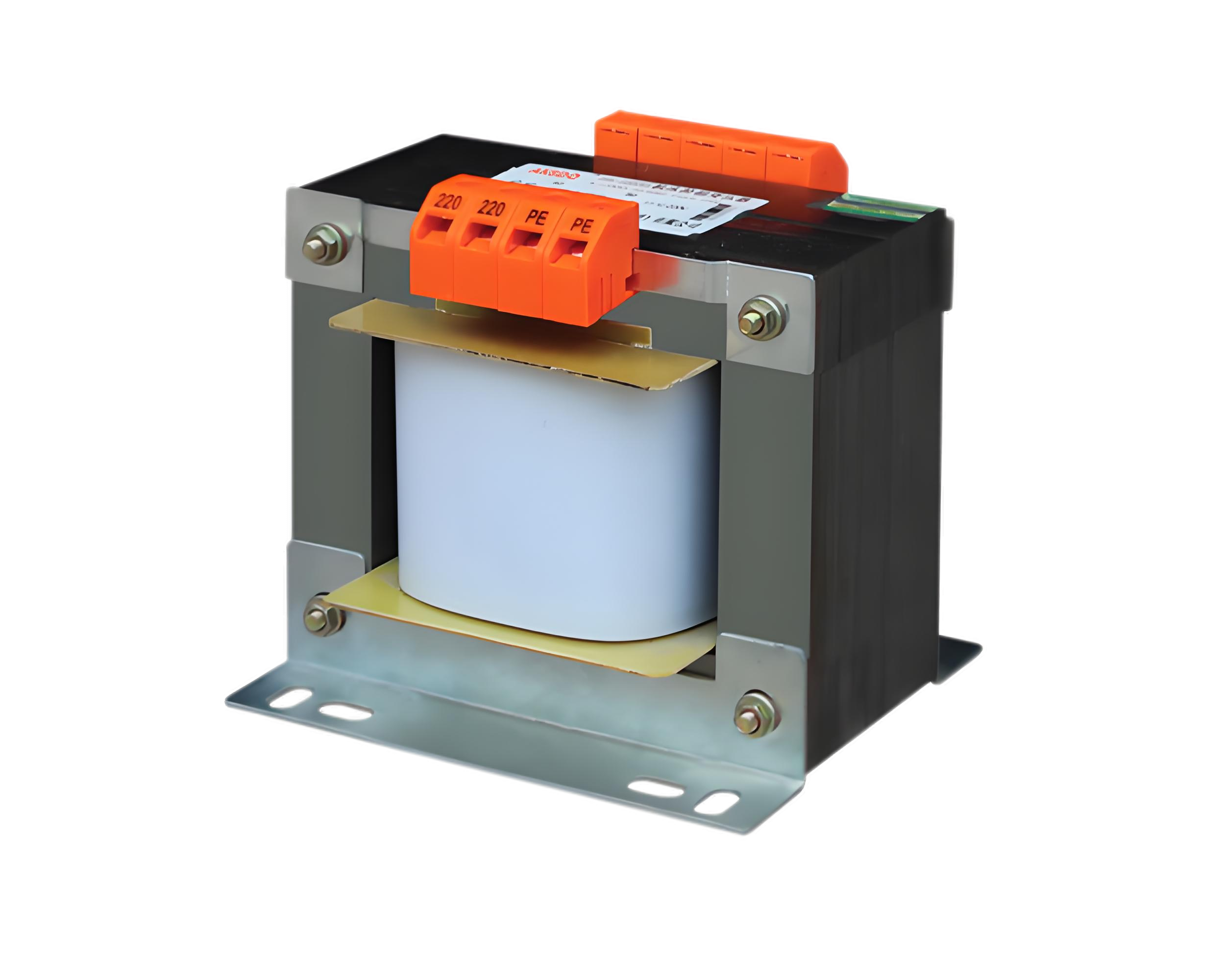
As one of the most fundamental voltage conversion devices in power systems, the single-phase transformer plays a vital role in daily life and industrial control. Although it may not match the efficiency of three-phase transformers in large-scale applications, its simplicity, low cost, and ease of maintenance make it indispensable in smaller-scale scenarios.
With the development of smart and energy-saving technologies, future single-phase transformers will continue to evolve toward higher efficiency, environmental friendliness, and intelligent monitoring, further enhancing their value in power distribution systems.


