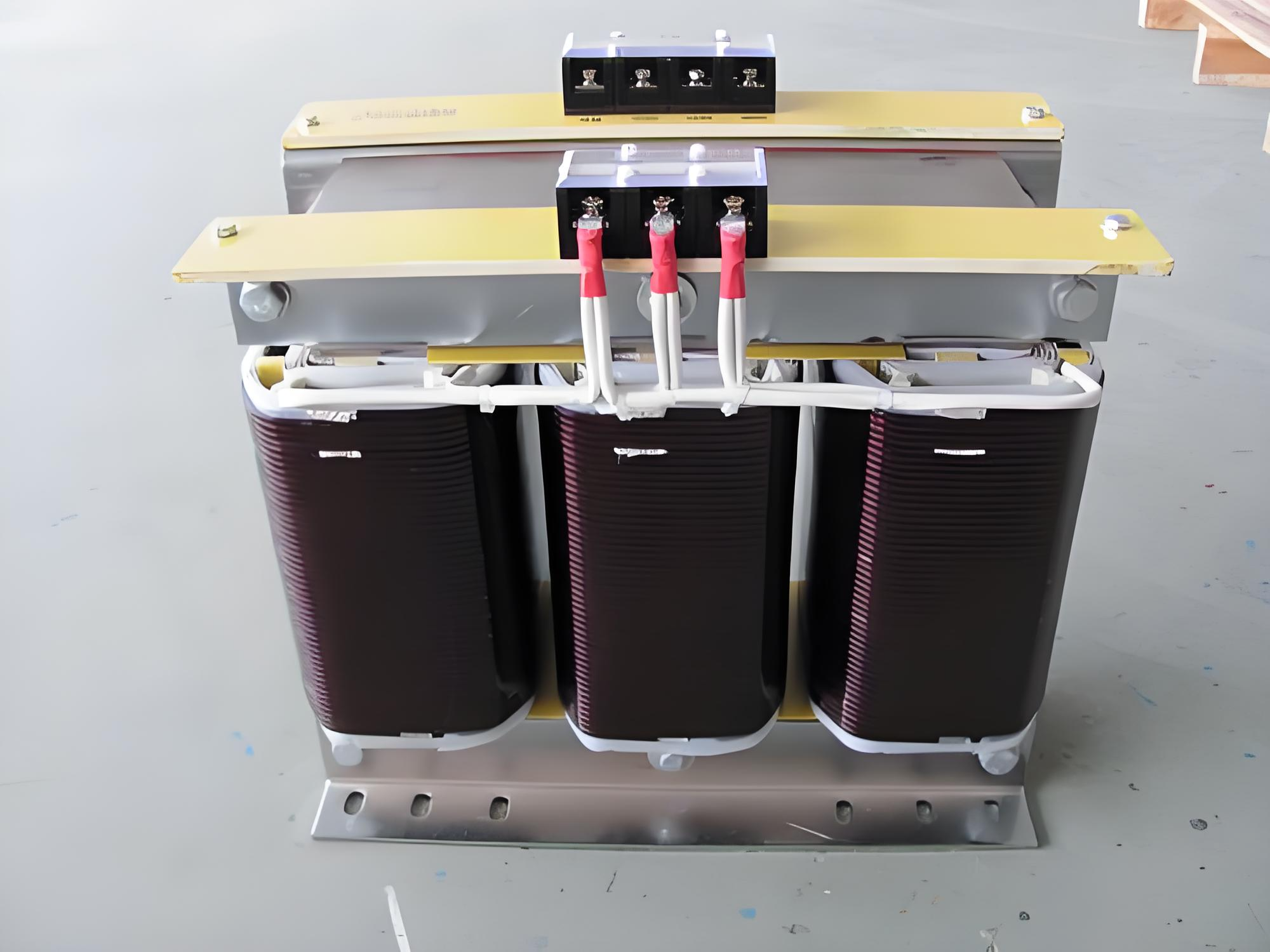
A three-phase isolation transformer is a specialized electrical device designed to transfer electrical power from a three-phase alternating current (AC) source to a load while providing galvanic isolation between the input (primary) and output (secondary) windings. This separation ensures that there is no direct electrical connection between the two sides, offering enhanced safety, noise reduction, and protection against voltage fluctuations.
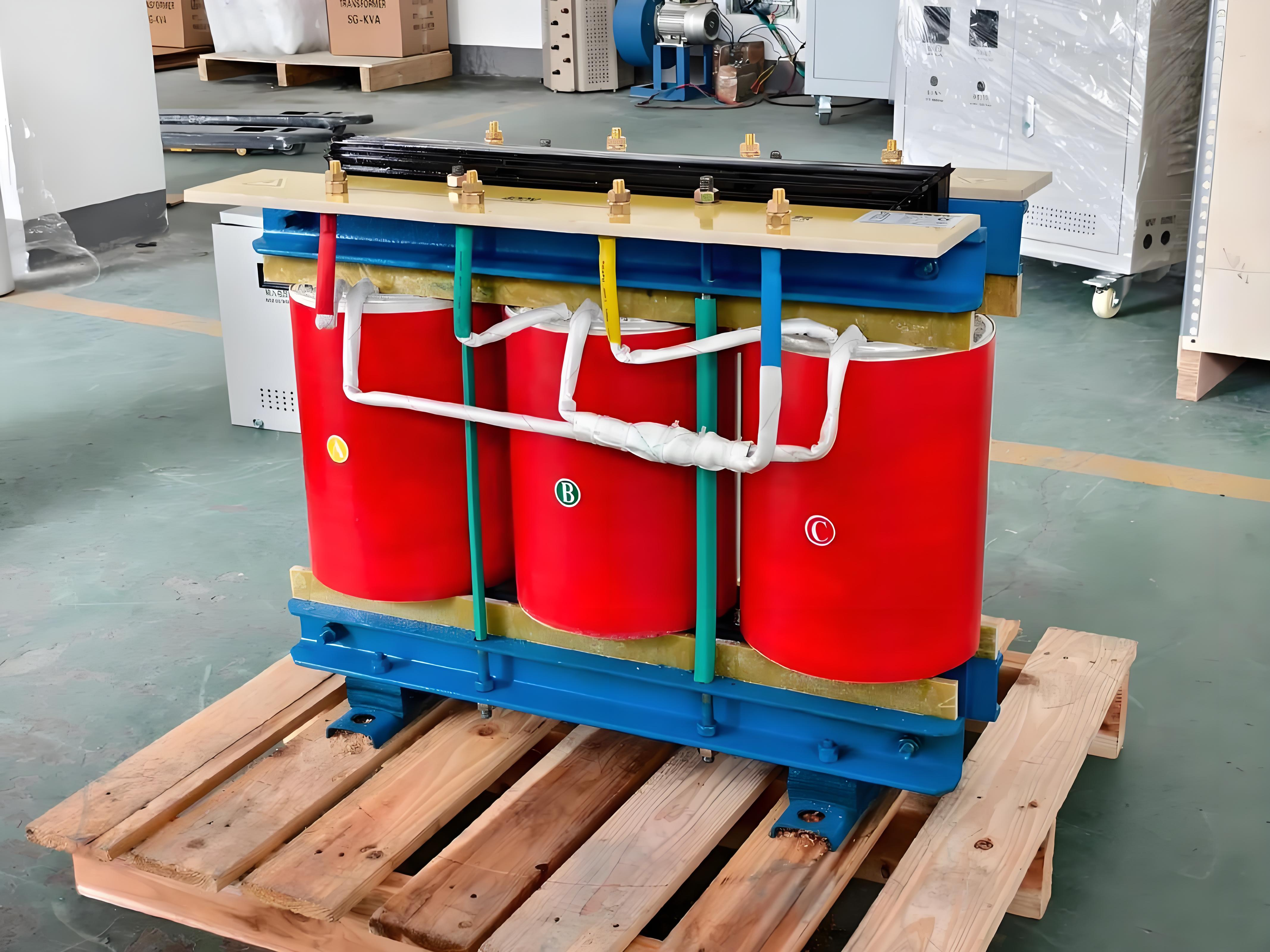
Function of a Three-Phase Isolation Transformer
The primary purpose of a three-phase isolation transformer is to provide electrical isolation between the source and the load. This serves several critical functions:
-
Electrical Safety:
- By isolating the primary and secondary windings, the transformer prevents accidental contact with high voltages, reducing the risk of electric shock to personnel and equipment.
-
Noise Reduction:
- The isolation minimizes the transmission of electrical noise, harmonics, and interference from the source to the load. This is particularly important for sensitive equipment like medical devices, communication systems, and industrial control systems.
-
Voltage Regulation:
- Some isolation transformers are equipped with taps or designed to stabilize the output voltage, mitigating voltage spikes, sags, or imbalances in the supply.
-
Fault Protection:
- The transformer helps protect connected equipment from faults such as ground loops, transient surges, and short circuits by breaking the direct path between the source and the load.
-
Grounding and Neutral Isolation:
- In certain applications, isolation transformers are used to create a dedicated isolated neutral point or to eliminate grounding issues in unbalanced systems.
Principle of Operation
The operation of a three-phase isolation transformer is based on the principles of electromagnetic induction and follows these key steps:
-
Electromagnetic Induction:
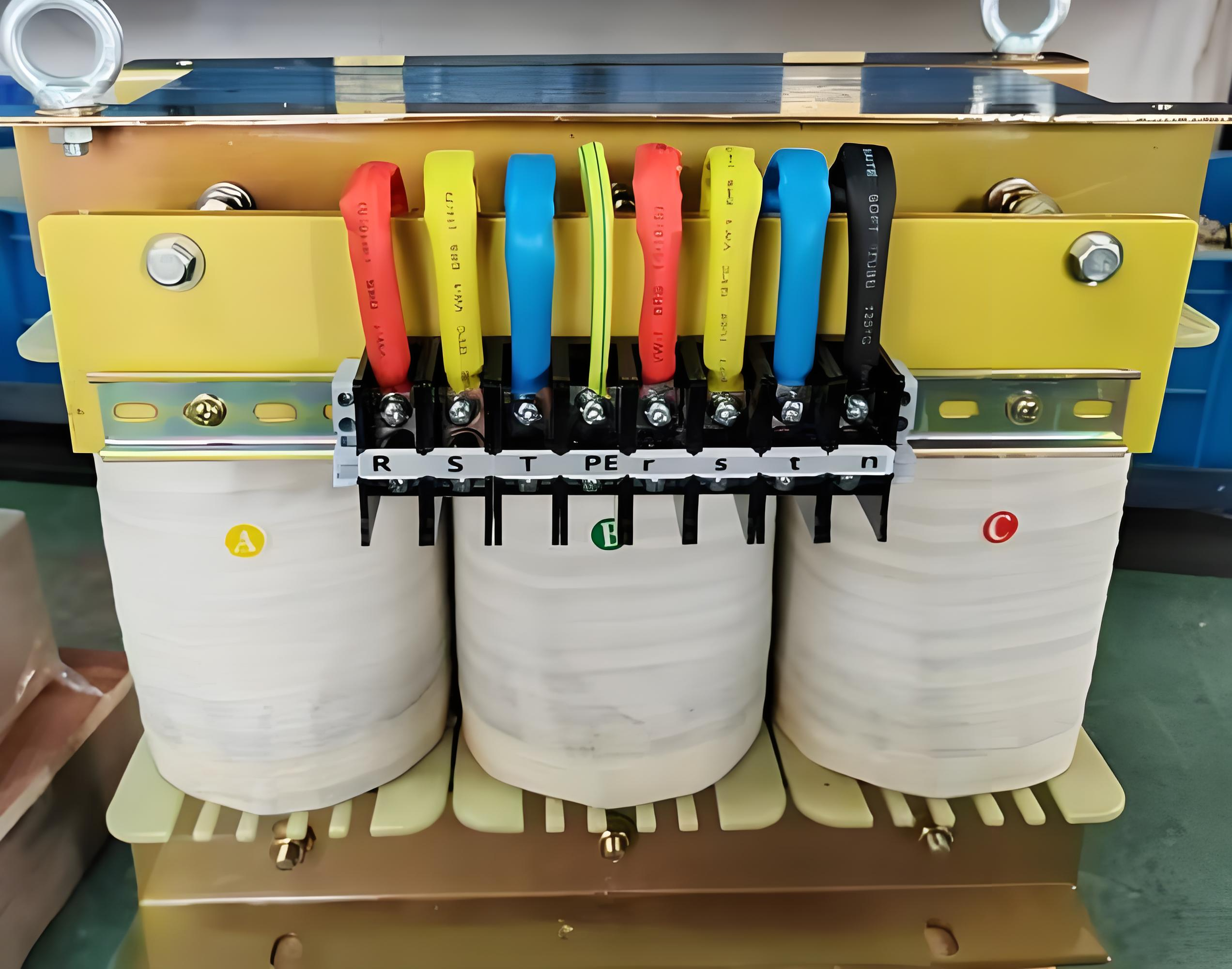
- A three-phase isolation transformer consists of three sets of primary and secondary windings, each wound around a common magnetic core. When a three-phase AC voltage is applied to the primary windings, it generates a time-varying magnetic flux in the core.
-
Mutual Induction:
- The magnetic flux induces an electromotive force (EMF) in the secondary windings through mutual induction. The induced voltage in the secondary windings is proportional to the turns ratio of the windings (N1:N2), where N1 is the number of turns in the primary winding and N2 is the number of turns in the secondary winding.
-
Galvanic Isolation:
- Since there is no direct electrical connection between the primary and secondary windings, the transformer provides galvanic isolation. This means that any electrical faults, noise, or disturbances on the primary side do not directly affect the secondary side.
-
Three-Phase Configuration:
- In a three-phase system, the transformer typically has a delta (Δ) or wye (Y) configuration for both the primary and secondary windings. Common configurations include Δ-Δ, Y-Y, Δ-Y, and Y-Δ, depending on the application requirements.
-
Voltage Transformation:
- If the turns ratio is 1:1, the transformer acts purely as an isolator without changing the voltage level. However, if the turns ratio differs, the transformer can step up or step down the voltage as required.
Applications of Three-Phase Isolation Transformers
-
Industrial Equipment:
- Used to isolate sensitive machinery and control systems from voltage fluctuations, harmonics, and noise in industrial environments.
-
Medical Facilities:
- Employed in hospitals and laboratories to ensure safe and reliable power supply to critical medical equipment, minimizing the risk of electrical hazards.
-
Data Centers:
- Protect servers and IT infrastructure from electrical noise and transient surges, ensuring uninterrupted operation.
-
Renewable Energy Systems:
- Integrated into solar and wind energy systems to isolate inverters and other components from grid disturbances.
-
Power Distribution:
- Utilized in substations and distribution networks to isolate different sections of the grid and enhance overall system reliability.
Advantages of Three-Phase Isolation Transformers
-
Enhanced Safety:
- Prevents electrical shocks and protects equipment from overvoltage conditions.
-
Improved Power Quality:
- Reduces harmonic distortion, electromagnetic interference (EMI), and radio-frequency interference (RFI).
-
Flexibility in Grounding:
- Allows for custom grounding configurations, eliminating ground loop issues.
-
Durability and Reliability:
- Designed to operate efficiently under varying load conditions, ensuring long-term performance.
Key Considerations in Design and Selection
When selecting or designing a three-phase isolation transformer, the following factors must be considered:
-
Power Rating:
- The transformer's capacity (in kVA) should match the load requirements to avoid overload conditions.
-
Voltage Levels:
- Ensure compatibility with the input and output voltage levels of the system.
-
Efficiency:
- High-efficiency transformers minimize energy losses and reduce operating costs.
-
Insulation and Cooling:
- Choose appropriate insulation materials (e.g., dry-type or oil-immersed) and cooling methods (e.g., natural air cooling or forced cooling) based on the application.
-
Environmental Conditions:
- Consider factors such as ambient temperature, humidity, and potential exposure to contaminants.