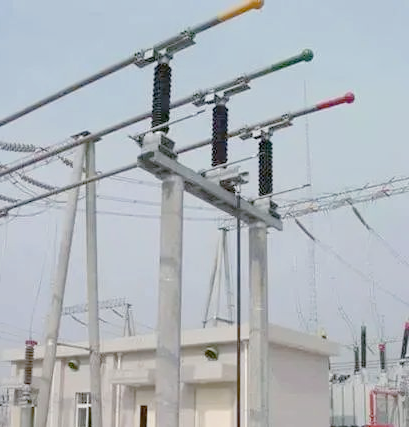
Transformers are critical components in power systems, and their abnormal operating conditions primarily include overload, overcurrent caused by external short circuits, overvoltage at the neutral point due to external grounding faults, oil level reduction caused by oil tank leakage, or temperature rise due to cooling system failures. Additionally, large-capacity transformers, due to their high rated working magnetic flux density (which is proportional to the voltage-to-frequency ratio), may experience over-excitation faults when operated under overvoltage or low-frequency conditions. To address these issues, large transformers typically employ the following protection methods:
1. Gas Protection
- Gas protection responds to internal faults in the transformer, such as short circuits within the oil tank or a drop in the oil level.
- Oil-immersed transformers with capacities of 0.8 MVA and above, and workshop-type oil-immersed transformers with capacities of 0.4 MVA and above, should be equipped with gas protection.
- When minor gas is generated or the oil level drops, the protection system should instantly trigger an alarm signal. When a large amount of gas is produced, the protection system should trip the circuit breakers on all sides of the transformer.
- Load-tap-changing oil-immersed transformers should also have gas protection installed for their tap-changing devices.
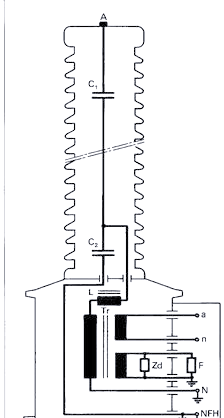
2. Differential Protection or Instantaneous Current Protection
- Differential protection or instantaneous current protection is used to detect phase-to-phase short circuits in transformer windings or outgoing lines, ground faults in high-ground-current systems, and inter-turn short circuits in windings.
- The protection system trips the circuit breakers on all sides of the transformer instantaneously.
-
Application Guidelines:
- For factory-use transformers below 6.3 MVA, parallel-operating transformers, standby transformers below 10 MVA, and standalone transformers, if the backup protection time exceeds 0.5 seconds, instantaneous current protection should be installed.
- For factory-use working transformers of 6.3 MVA and above, parallel-operating transformers, standby transformers of 10 MVA and above, standalone transformers, and transformers where instantaneous current protection sensitivity does not meet requirements, differential protection should be installed.
- For transformers with high-side voltages of 330 kV and above, dual differential protection can be installed.
- For generator-transformer units, if there is a circuit breaker between the generator and transformer, the generator should have separate differential protection. If no circuit breaker exists, generators and transformers up to 100 MVA can share differential protection. For generators above 100 MVA, in addition to shared differential protection, the generator should also have separate differential protection. For generator-transformer units of 200–300 MVA, additional differential protection can be installed on the transformer, providing dual rapid protection.
3. Overcurrent Protection
- Overcurrent protection responds to external phase-to-phase short circuits and serves as backup for gas protection and differential protection (or instantaneous current protection). It operates with a time delay to trip the circuit breakers.
-
Application Guidelines:
- Overcurrent protection is suitable for step-down transformers.
- Overcurrent protection initiated by composite voltage is suitable for step-up transformers, system tie transformers, and step-down transformers where overcurrent protection does not meet sensitivity requirements.
- Negative-sequence current and single-phase low-voltage-initiated overcurrent protection can be used for step-up transformers of 63 MVA and above.
- If sensitivity and selectivity requirements are not met using the above protections, impedance protection can be employed.
4. Zero-Sequence Current Protection
- Zero-sequence current protection responds to external ground faults in high-ground-current systems.
- In systems of 110 kV and above, if the transformer neutral point may be grounded during operation, zero-sequence current protection should be installed for step-up or step-down transformers with two-sided or three-sided power sources. This serves as backup protection for the main transformer protection and as backup for adjacent components.
- What is Zero-Sequence Current Protection? Zero-sequence current protection uses the zero-sequence current generated during a ground fault to trigger the protection system. A dedicated zero-sequence current transformer is used to achieve grounding protection in cable systems. The zero-sequence current transformer is placed around the three-core cable, and the current relay is connected to the secondary winding of the transformer. During normal operation or in the absence of ground faults, the vector sum of the three-phase currents equals zero, resulting in negligible current in the secondary winding (only a small unbalanced current). Thus, the current relay does not operate. During a ground fault, a significant current appears in the secondary winding, triggering the current relay to issue a signal or trip the circuit.
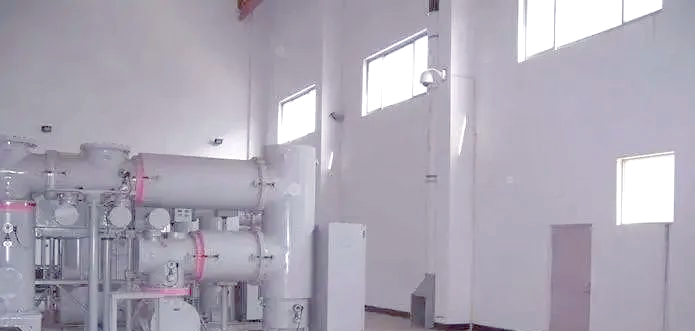
5. Overload Protection
- Overload protection responds to symmetrical overloads in transformers.
- For transformers of 400 kVA and above, when operated in parallel or as a backup power source for other loads, overload protection should be installed based on potential overload conditions. For autotransformers and multi-winding transformers, the protection system should respond to overloads in the common windings and on all sides.
- In most cases, overload currents are three-phase symmetrical. Therefore, overload protection only needs to monitor one phase current through a current relay, which triggers an alarm after a time delay. The installation location of the protection system should ensure it can detect overloads in all transformer windings. In substations without regular staff, overload protection can trip the circuit or disconnect part of the load if necessary.
6. Over-Excitation Protection
- Over-excitation protection responds to over-excitation conditions in transformers.
- Modern large transformers are designed with high-rated working magnetic flux densities (approximately 1.7–1.8 T) to save materials, reduce costs, and minimize transportation weight. However, this makes them prone to over-excitation under overvoltage conditions, as they approach saturation magnetic flux density (1.9–2 T). Due to the "hard" magnetization curve, when over-excitation occurs, core saturation reduces excitation impedance, causing a rapid increase in excitation current. When the working magnetic flux reaches 1.3–1.4 times the normal value, the excitation current can reach the rated current level.
- Furthermore, the excitation current is non-sinusoidal and contains many high-order harmonic components. Eddy current losses in the core and other metal components are proportional to the square of the frequency, leading to severe overheating of the core, metal components, and insulation materials. If the over-excitation factor is high and persists for too long, the transformer may be damaged.
- Therefore, transformers with high-side voltages of 500 kV should be equipped with over-excitation protection. The purpose of installing over-excitation protection is to detect over-excitation conditions, issue warnings, or trip the circuit to prevent the transformer from being damaged due to excessive over-excitation.