• JSD step up transformer manufacturers SG- 500 KVA
  • JSD step up transformer manufacturers SG- 500 KVA
  • JSD step up transformer manufacturers SG- 500 KVA
  • JSD step up transformer manufacturers SG- 500 KVA
  • JSD step up transformer manufacturers SG- 500 KVA
  • JSD step up transformer manufacturers SG- 500 KVA
  • JSD step up transformer manufacturers SG- 500 KVA
  • JSD step up transformer manufacturers SG- 500 KVA
  • JSD step up transformer manufacturers SG- 500 KVA
  • JSD step up transformer manufacturers SG- 500 KVA

JSD step up transformer manufacturers SG- 500 KVA

JSD builds this dry-type 500 kva 3 phase transformer to order, with custom primary and secondary voltages and full inspection before dispatch.
  • JSD step up transformer manufacturers SG- 500 KVA
  • JSD step up transformer manufacturers SG- 500 KVA
  • JSD step up transformer manufacturers SG- 500 KVA
  • JSD step up transformer manufacturers SG- 500 KVA
  • JSD step up transformer manufacturers SG- 500 KVA

Description

Product Overview

A three-phase step up transformer closes the gap between the voltage a site is given and the voltage its equipment needs. This unit is a dry-type transformer rated at 500 kVA, wound to the ratio agreed with your engineers: the supply side takes the industrial voltage available on site, and the secondary is built to the level the load actually runs at.

This 500 kVA transformer is the size that suits a workshop, a production line or one large machine rather than a whole distribution network — one transformer, one ratio, one load group. Buyers usually arrive with a specific mismatch in front of them: a machine rated for a higher grid voltage than the building supplies, a new line added to an existing board, or a failed unit whose nameplate has to be matched exactly.

We are a transformer manufacturer rather than a trading company, with more than 20 years in low-voltage transformer production and our own plants in Shanghai and Wenzhou. Winding, core assembly, testing and packing are all done in-house without subcontracting the coil work, which is what makes a custom transformer practical when the ratio is non-standard: the coil is wound for your project, and questions about connection group, insulation class or footprint reach the people who build the unit.

Build & Materials

- High-permeability silicon steel core, laminated in EI or CD form, keeps no-load losses down and holds the winding assembly rigid under load.

Dry-tape cooling takes oil out of the picture entirely: nothing to fill, filter, test or dispose of, no bunding requirement, and no fluid leak over the service life.

Quiet running, rated at ≤60 dB, helped by tight lamination and a rigid sheet-steel enclosure.

Straightforward installation: the unit is floor-mounted, wired at an internal terminal block, and needs no routine maintenance in normal service beyond keeping the ventilation clear and the terminations tight.

Enclosure and finish can be adapted to the position — dusty, humid or high-altitude locations, or a cabinet that has to sit alongside existing equipment without looking out of place.

Every unit is inspected 100% and passes through eight dedicated quality checkpoints, from raw material warehousing through to finished product dispatch.

Ratings across the range share the same core-and-winding approach, so a step up transformer 500kva unit on one line and a smaller unit on a control panel are specified, maintained and spares-planned the same way.

As step up transformer manufacturers we specify the core steel, conductor, insulation and enclosure ourselves, so a late change in site conditions is handled at the drawing stage rather than patched on site.

ConfigurationThree-phase step up transformer, dry-tape cooled
CoreHigh-permeability silicon steel, EI or CD laminated
WindingsCopper or aluminium conductors, wound and assembled in-house
CoolingDry-tape (air) construction with no oil circuit
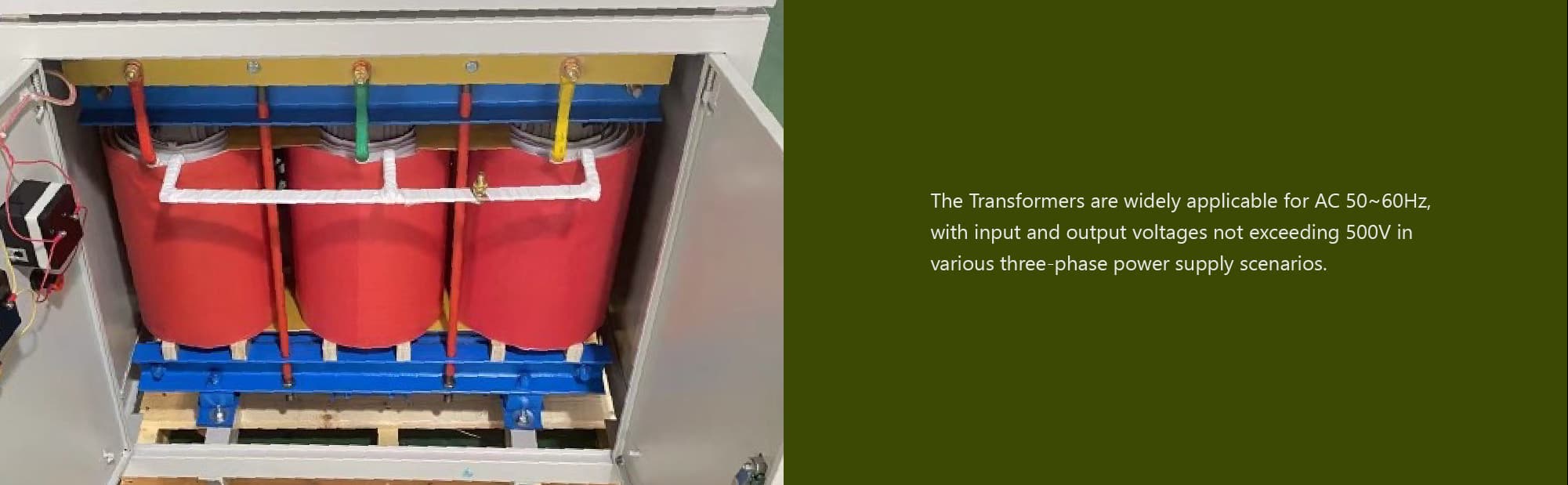
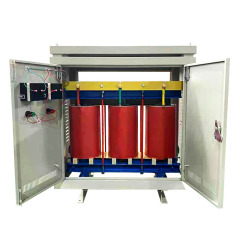
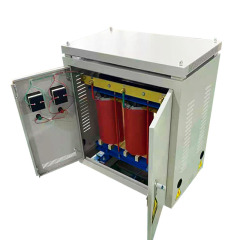
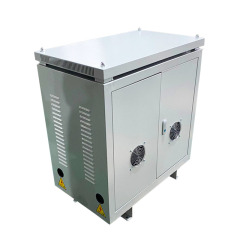
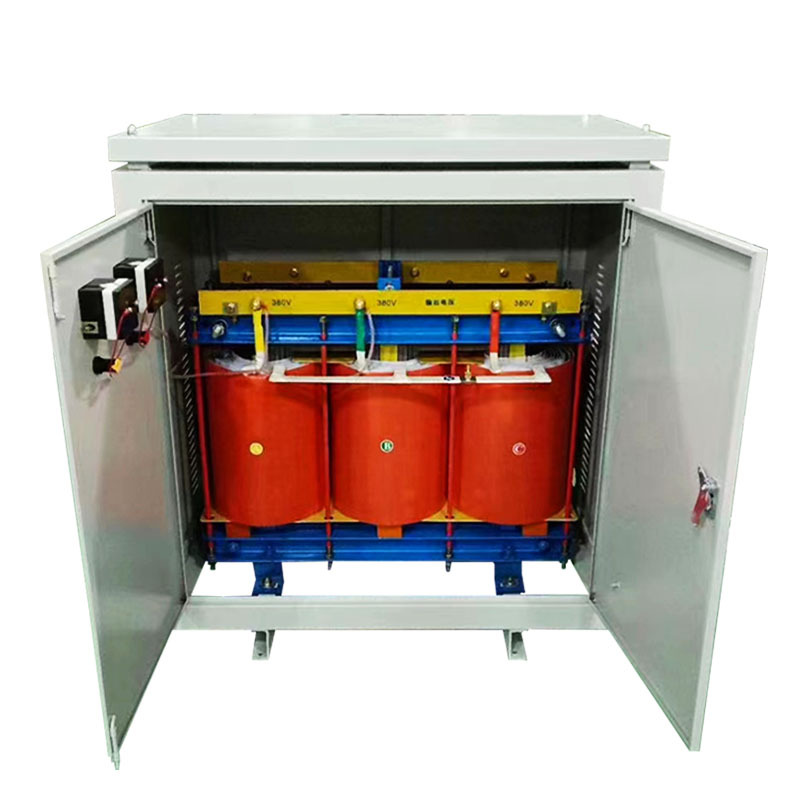
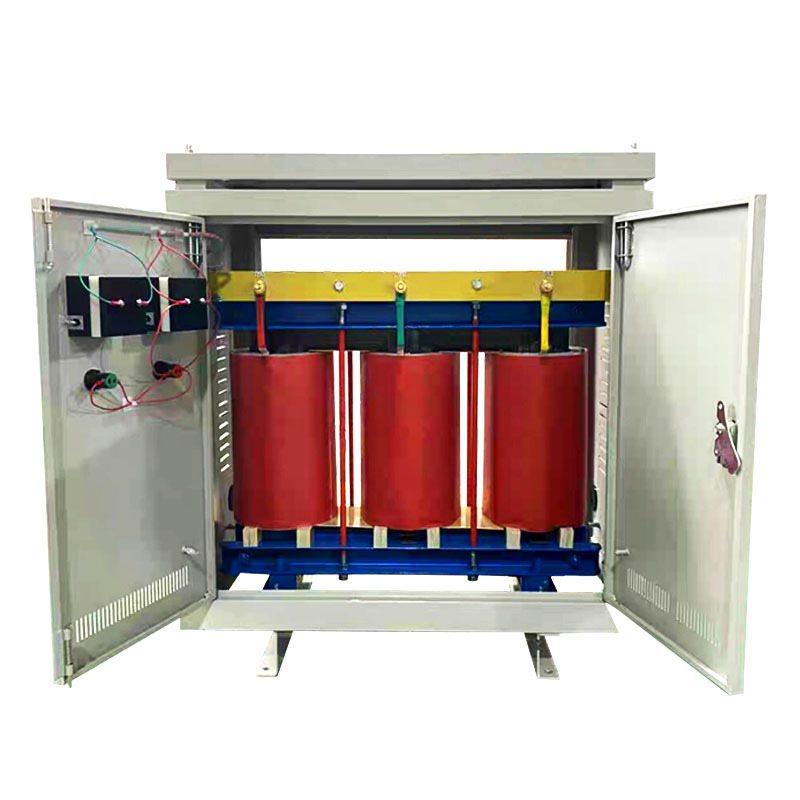
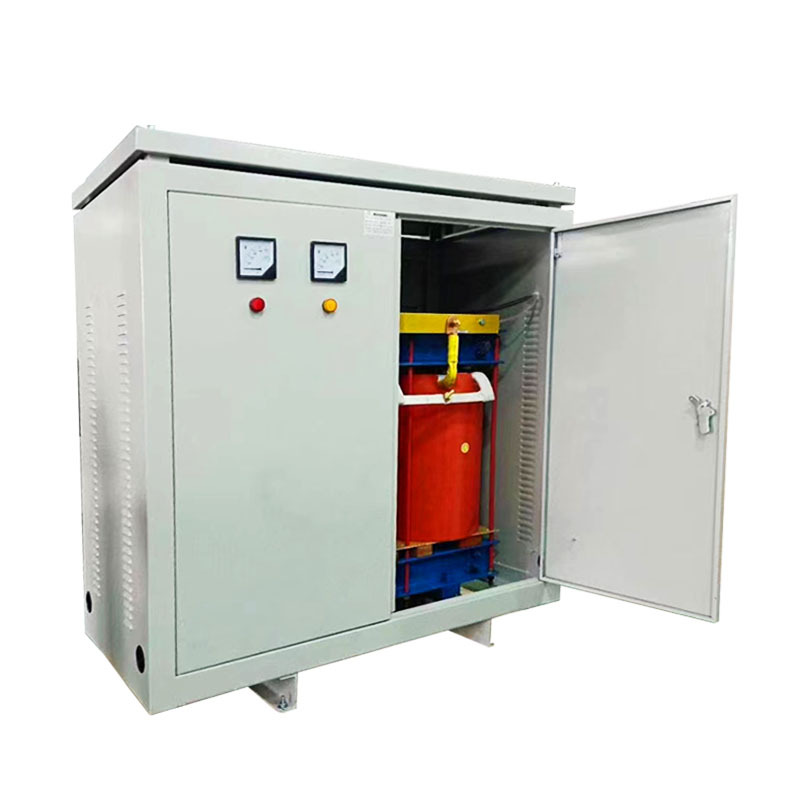
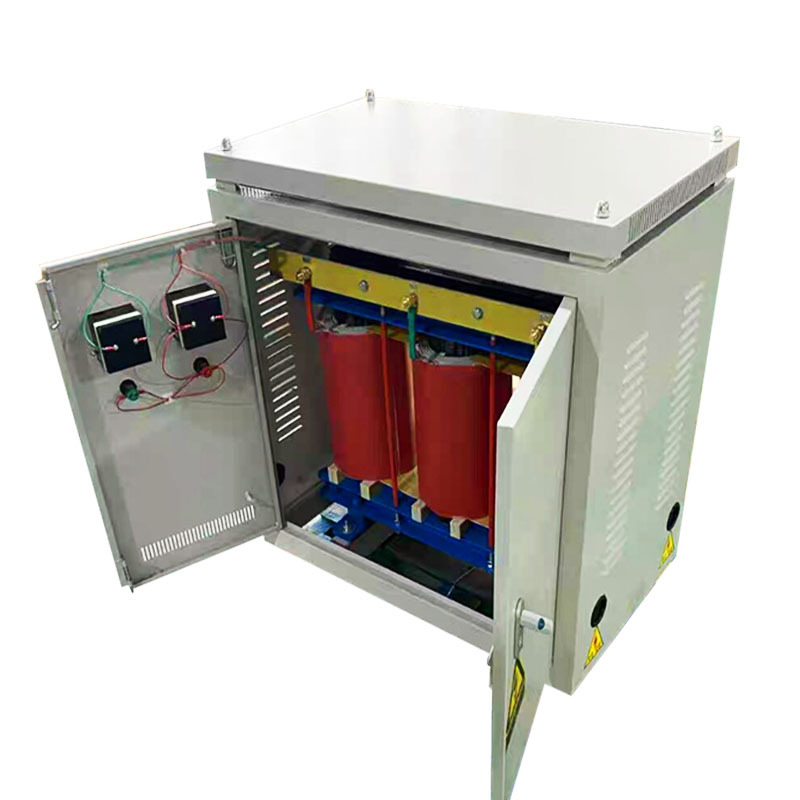
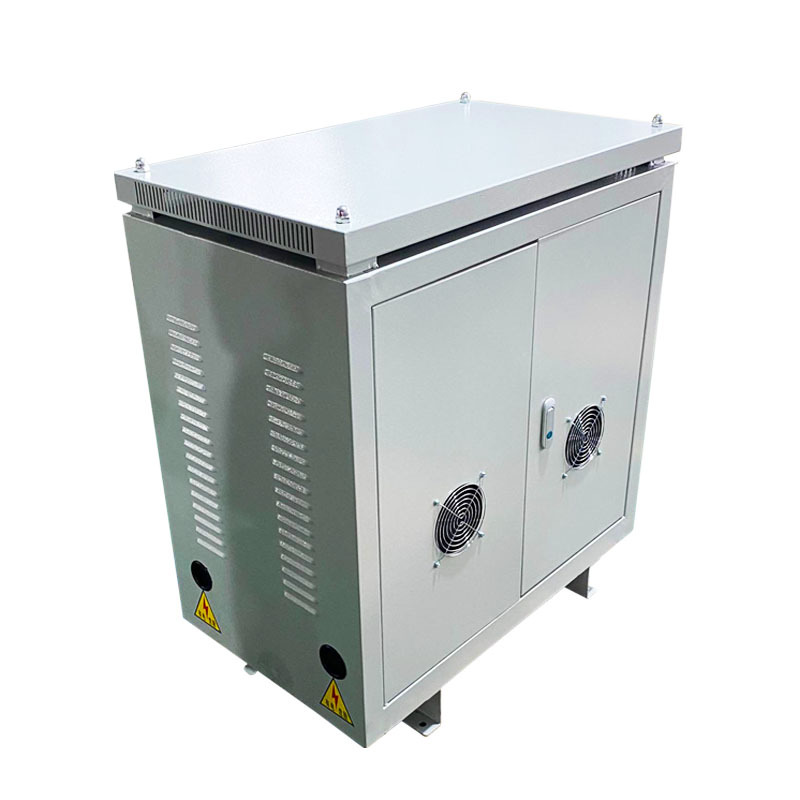
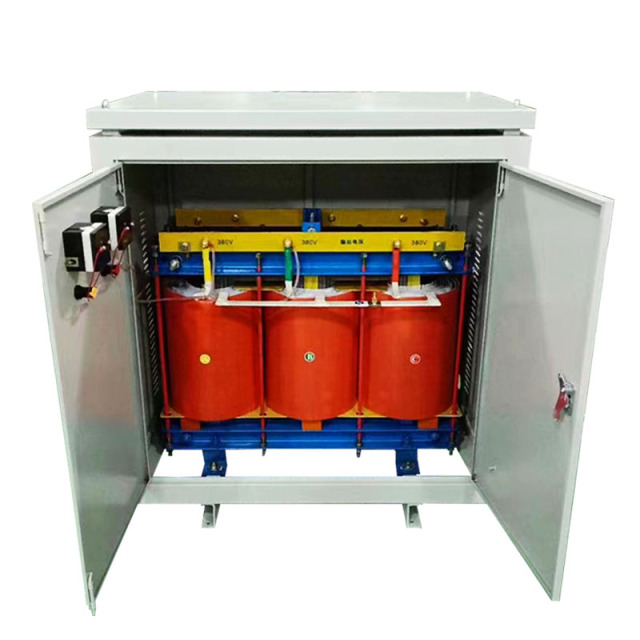
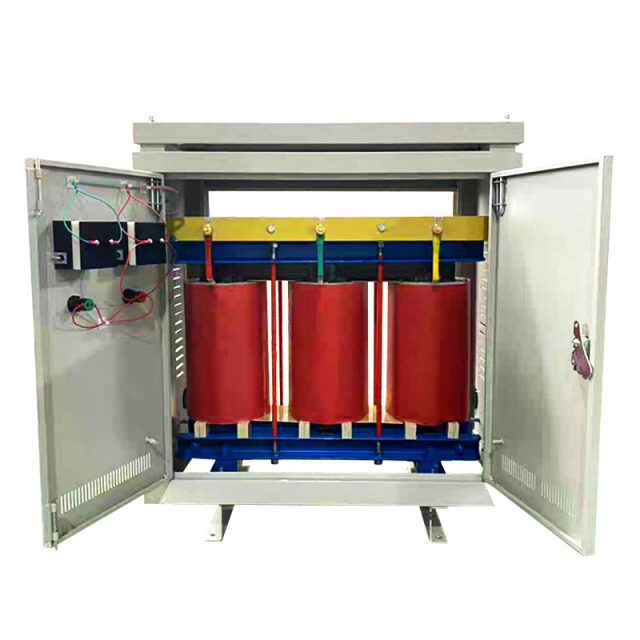
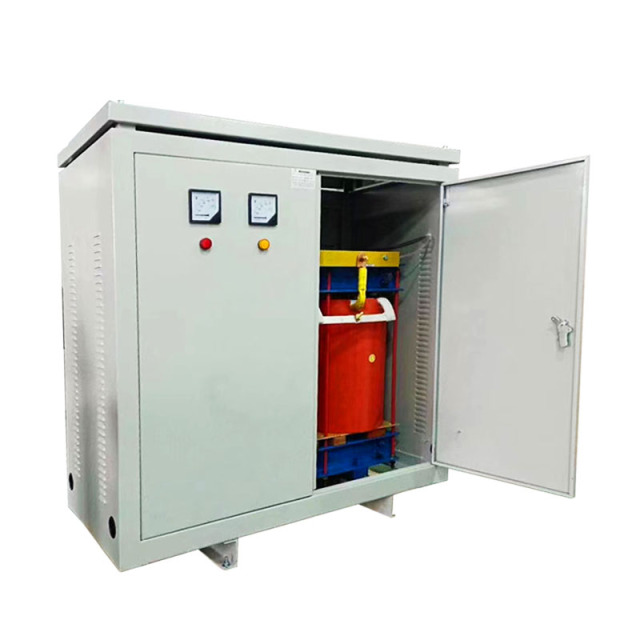
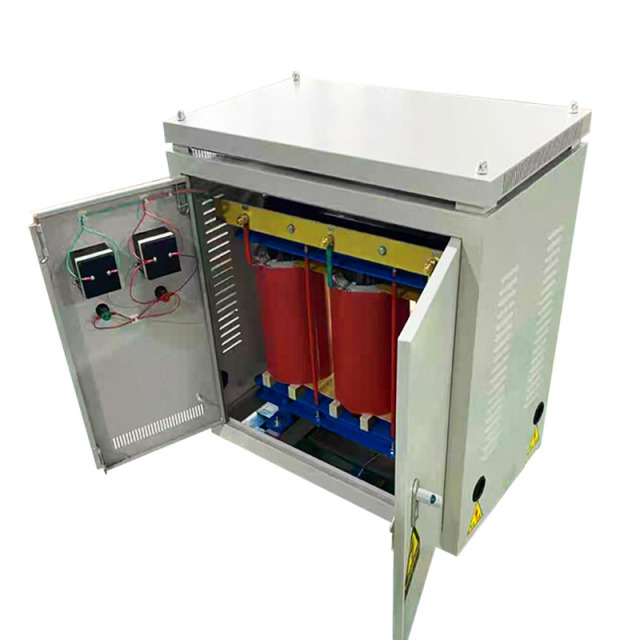
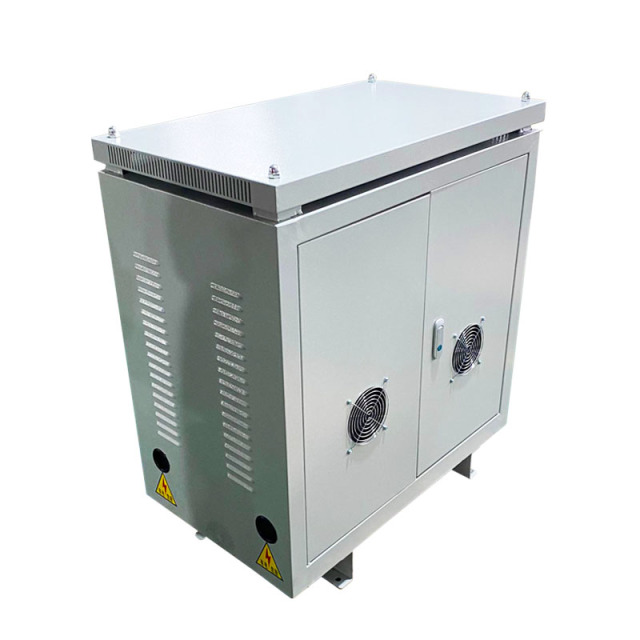
EnclosureSheet-steel cabinet with hinged access doors on a floor-mounted base
TerminationsInternal terminal block reached through the access door
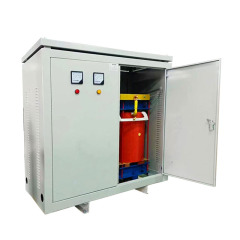
InstrumentationFront-panel meters and indicator buttons for at-a-glance status
Close-up of transformer coils inside an enclosure with explanatory text

Winding Choice & Site Conditions

Copper or aluminium

Both conductor types are wound on the same equipment to the same approved drawing, so this is a thermal and commercial decision rather than a quality tier. Copper has the lower resistance, so the winding runs cooler for the same load — the sensible choice for a unit that stays energised through long shifts, sits in a warm plant room, or carries a load with meaningful harmonic content. Aluminium brings weight and cost down, which counts on a 500 kVA transformer that has to be lifted into a first-floor plant room or moved between sites; the conductor is larger in cross-section for the same current, so terminations need proper bimetallic lugs where aluminium meets copper. Tell us the duty cycle, the air temperature around the unit, the lifting arrangement at the installation point and your budget position, and we will recommend one and stay with it. Winding material is fixed at the moment the coil is wound, so it belongs on the approved drawing rather than on a note added later.

Sites that are not standard

A dry-type three-phase step up transformer is cooled by the air around it, which makes the room part of the design. Our standard build suits an ordinary industrial plant room and sites up to roughly 1,000 m above sea level; higher than that the air thins, the unit loses cooling capacity, and we supply a plateau version with wider insulation and cooling margins instead of shipping a standard unit into a derated duty. Persistently humid or coastal sites get insulation and finish treatment to suit, because condensation forming on a cold winding is what eventually tracks and fails. Dusty locations — a foundry, a quarry, a cement plant — call for a sealed or filtered enclosure arrangement plus a cleaning routine that keeps the winding and ventilation paths clear. Ambient temperature, corrosive atmosphere, indoor or outdoor siting, altitude and seismic requirements can all be designed in; none of them can be corrected once the enclosure is fabricated. Put them into the specification alongside the electrical data, and describe how the unit will actually be operated and maintained on site.

Applications

  • Plant voltage matching — the most common job: a distribution board supplies 380 V and an imported machine needs 480 V, so the transformer sits between that board and that machine only.
  • General three-phase power supply work where input and output voltages stay below 500 V at 50/60 Hz, which covers most factory, workshop and equipment-room installations.
  • Machine building and panel integration — the transformer is designed into the line so the machine ships with a supply voltage the end customer's site already has.
  • Plant expansion — a new line, furnace or test rig is added without touching the incoming supply, and the transformer delivers the new load at the voltage it needs.
  • Multi-unit projects — contractors and plants that use one step up transformer supplier across several buildings keep ratios and connection groups consistent, which simplifies drawings and spare planning later.
  • Where a 500 kVA transformer is specified as the main three-phase unit for a workshop, it usually feeds a distribution board rather than a single machine, so the secondary voltage has to match the board and not just the largest load on it.
  • Test and commissioning benches, where a specific test voltage has to be generated from the workshop supply and adjusted at the tapping point.

Specifications

ModelSG-500KVA
Rated power500 kVA
Series power range500 VA to 2000 kVA
PhaseThree-phase
Primary voltage220 V, 380 V, 400 V, 415 V, 440 V, 480 V (custom voltages available)
Secondary voltage100 V, 200 V, 208 V, 220 V, 230 V, 380 V (custom voltages available)
Frequency50/60 Hz
Winding connectionDy, Dd, Dyn, Yy, Yyn, Yd (to order)
Insulation classB, F or H (on request)
Work efficiency≥90%
Noise≤60 dB
Insulation strength>100 MΩ (DC 500 V)
Dielectric strength and impedanceBuilt to the values your project specifies
StandardsIEC60076, EN 61558-2-4

Custom Voltages & Windings

  1. Send a technical drawing if you have one — it is the fastest route and the one that leaves least to interpretation.
  2. Without a drawing, send the essentials: power rating, primary and secondary voltage, frequency, winding connection group, insulation class, the space the unit has to fit, and anything unusual about the site such as dust, humidity, altitude or ambient temperature.
  3. Say which winding is the supply and which is the load. A step up transformer 500kva build is wound for one direction, and the ratio, tappings and connection group follow from that.
  4. Our engineers turn the requirement into a proposed design. As step up transformer manufacturers we wind the coil set ourselves, so a non-standard ratio is a drawing change rather than a new product; custom solutions are normally returned within 48 hours.
  5. Approve the drawing before production — ratio, connection group, enclosure size and finish are fixed at this point, and late changes cost lead time.
  6. We wind, assemble, test and pack the unit, and the approved drawing travels with the order so what arrives matches what was signed off.

Installation & Commissioning

  1. Check the nameplate against the approved drawing before the unit comes off the pallet — ratio, connection group, rating and frequency.
  2. Set it on a level, load-bearing base with room for the doors to swing and for air to move through the cabinet; an air-cooled unit relies on convection, so do not box it in.
  3. Land the primary and secondary conductors on the internal terminal block, earth the enclosure, and torque the terminations to the values given in the installation instructions supplied with the unit.
  4. Test before energising: insulation resistance between windings and earth, and continuity through each winding.
  5. Energise and record the no-load secondary voltage at each tapping point, then compare it with the calculated ratio before any load is connected.
  6. Keep the commissioning readings on file. Routine care on a dry-type step up transformer is mostly visual — clear the ventilation, check terminations and look for dust build-up on the winding.

Ordering & Delivery

Orders start at a single unit — the minimum order quantity is ≧ 1 set, so a one-off replacement and a project batch go through the same process. Payment can be made by TT, Card Payment, ACH, SEPA, SWIFT, Alipay, WeChat Pay or Prepaid Card. Production takes 3 to 25 working days, depending on the order quantity and the complexity of the customization. Units ship in international wooden cases, or packed according to the actual transport needs. Every transformer carries a minimum 12-month warranty, with extended warranty options available depending on project requirements.

As your step up transformer supplier we put the ratio, connection group and enclosure size in writing before the coil is wound, and we normally return a detailed quotation within 24 hours of receiving your requirements. Send drawings or nameplate details to JSD@jsd-voltagetransformer.com or WhatsApp +86 135 1660 7609.

Technical Support & Model Matching

Because we build in our own factory, the engineers who answer your questions are the same people who configure the units on the line. Send us your input and output voltages, load, frequency and site conditions, and we will match the right model or design a custom transformer to suit. Our team stays with you from first enquiry through installation and commissioning, helps trace faults, and specifies spare or replacement units for equipment already in service. Twenty years of manufacturing know-how sits behind that support, so the technical answer comes with a build you can rely on.

FAQ

Does this transformer run on both 50 Hz and 60 Hz supplies?

Yes. The step up transformer is designed for 50/60 Hz supplies, and the ratio is confirmed against the frequency your site runs at. Frequency changes flux density and losses, so tell us at the specification stage whether the supply is 50 Hz, 60 Hz, or a site that has to handle both.

Copper or aluminium windings — which should I specify?

Both are wound in-house, and as step up transformer manufacturers we build either to the same drawings. Copper conducts better, runs cooler and holds up better in continuous industrial duty; aluminium is lighter and less expensive, which matters on larger units where weight and budget dominate. The decision usually comes down to duty cycle, ambient temperature, lifting capacity at the installation point and budget — describe the load profile and we will say which one we would specify.

How noisy is the unit in a working plant room?

It is rated at ≤60 dB. Most of what you hear is core hum at twice the supply frequency, and it rises slightly as load increases. A step up transformer 500kva unit standing on a level base with its doors closed is normally quieter than the machinery around it; if the unit has to sit in a quiet area, say so when you specify and we will look at the mounting arrangement with you.

Can it be built for a high-altitude or coastal site?

Yes. Ordinary builds suit sites below about 1,000 m; above that we supply a plateau version with adjusted insulation and cooling margins. Coastal or persistently humid sites get insulation and finish treatment to match. A 500 kva 3 phase transformer for a plateau installation is a different build from a standard one, so altitude and environment belong in the specification rather than in a note added after the order.

Which side is my supply, and can the same unit step down instead?

Each transformer is wound for the direction you order. Tell us which winding is the supply and which feeds the load, and the ratio, tappings and connection group are built around that; planning on running a step-up unit backwards is not a safe assumption. If you are replacing a unit from another step up transformer supplier, send the nameplate details and we will match the ratio and connection group rather than guess at them.

Get Started

We make it easy to get a quote and order a transformer. Follow the steps below to get started.

Recent Feedback

Single-Phase Control Transformer BK-400va

The custom-made special transformers always meet my requirements, and they are excellent. We've worked together several times now, and I trust them completely

100Kva Dry Tape Power Trans,Full Copper

A dedicated vehicle delivered the equipment to the construction site, and I am very satisfied. The transformer has been successfully inspected, and working directly with the manufacturer has been very satisfactory. There are a few more projects coming up, and I look forward to continuing our collaboration!

3-Phase Dry Tape Isolation Transformer

The factory has introduced machines recommended by a Chinese supplier. These include three-phase transformers with robust enclosures that do not overheat during operation, have ample capacity, provide stable voltage, and deliver sufficient power

Explosion-proof mine transformer,25Kva

I bought one before, and the transformer worked well. This time, I’m repurchasing it. After receiving the item, I tested it, and the quality is excellent. It has once again met my expectations, and I’m very pleased

We're ready to help

Call our toll-free number 0086-153-9087-8333 or complete the following inquiry form and our team will get back to you as soon as possible
Request A Quote

Request A Quote

Product Type *
Transformer
Vlotage stabilizer
Select Phase and kVA Rating *
Single Phase
Three Phase
10-20kva
21-30kva
Company *
My company is a *
Transformer
Single Phase
First Name *
last and First
LastName *
Email *
Phone *
Delivery Time *
1
2
3
Additional Information *
Upload Files *
updown