Product Overview
A single-phase, dry-type control transformer 500VA frame is built with both windings wound to your circuit rather than fixed at a catalogue ratio, so the control voltage a panel actually needs is what the transformer delivers, at 50 Hz or 60 Hz.
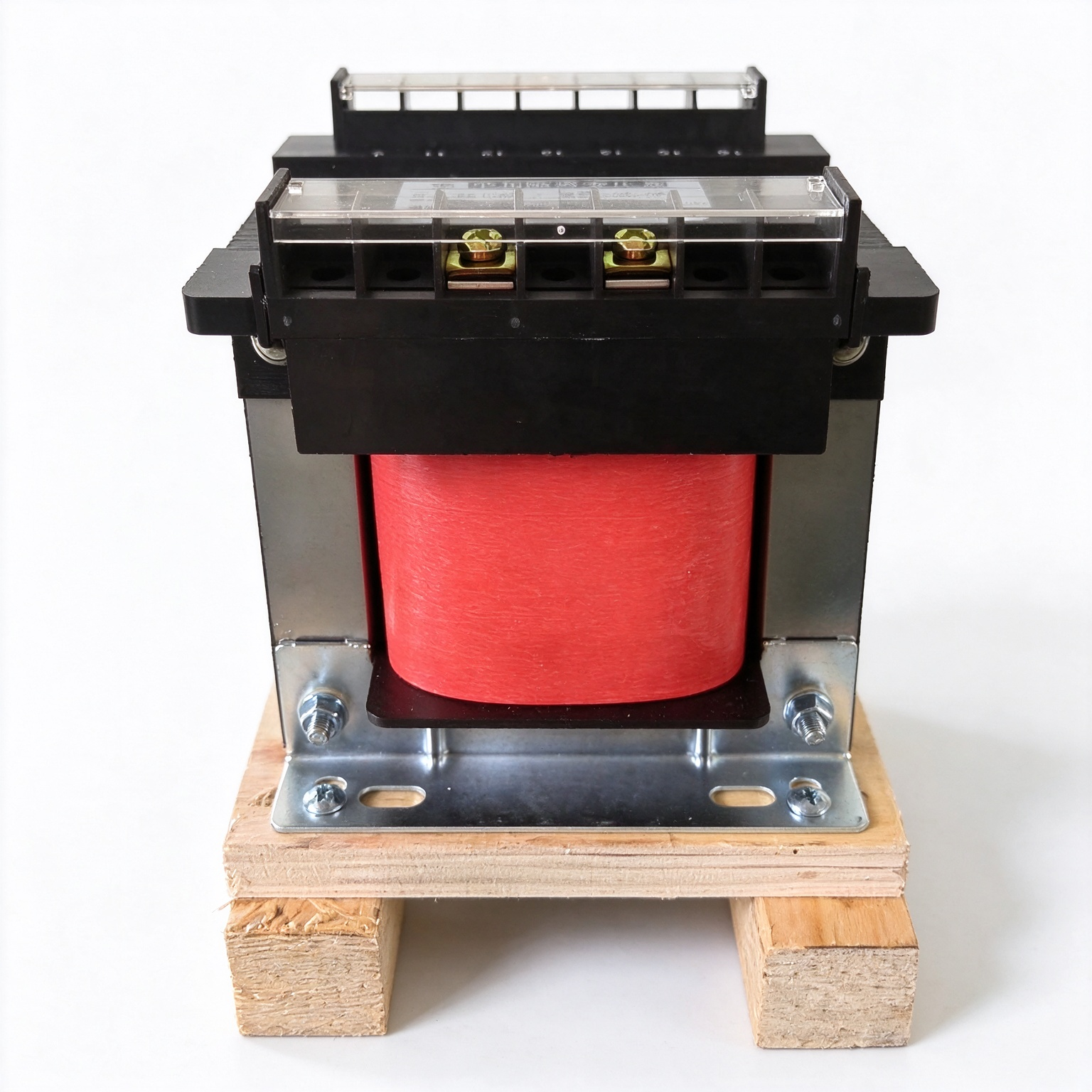
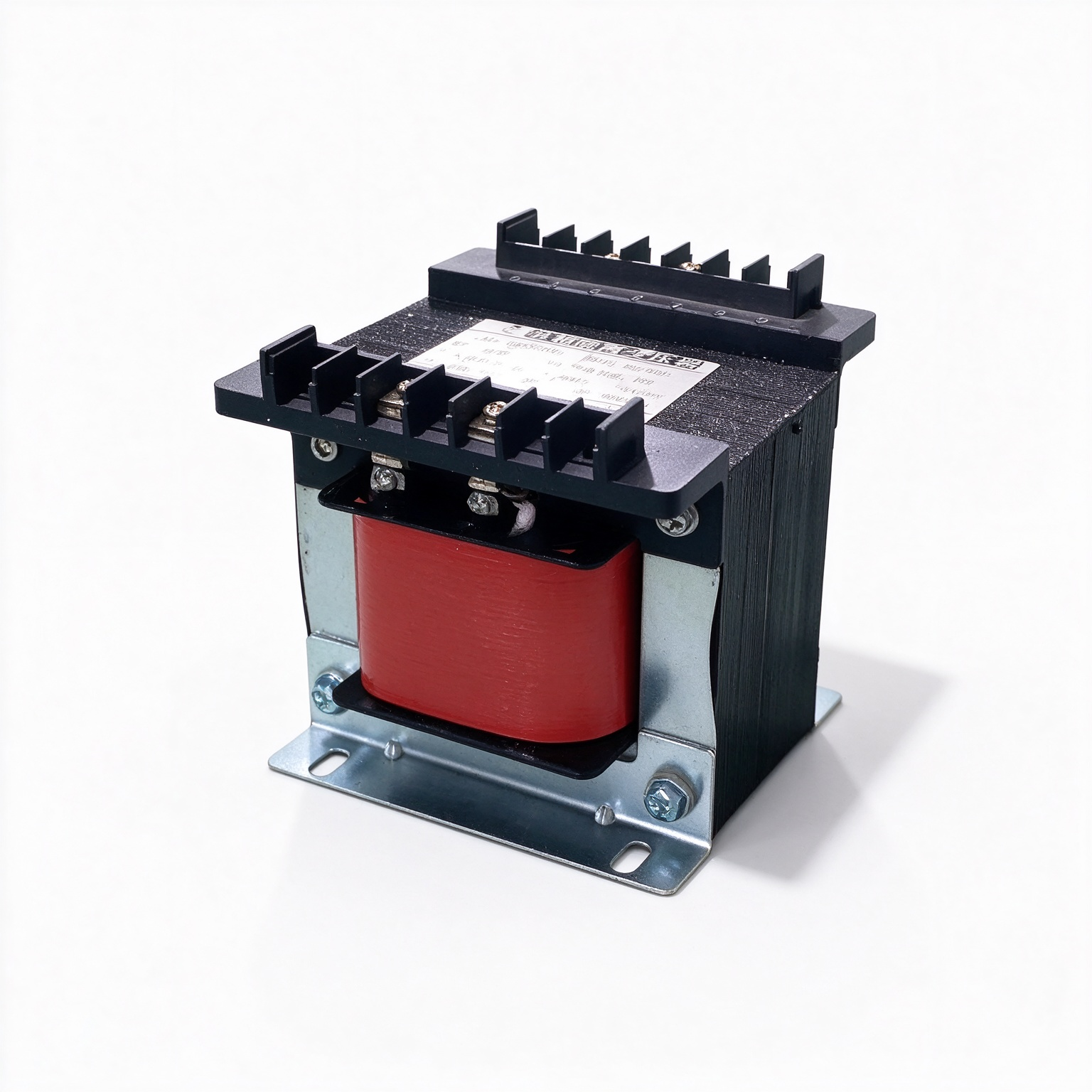
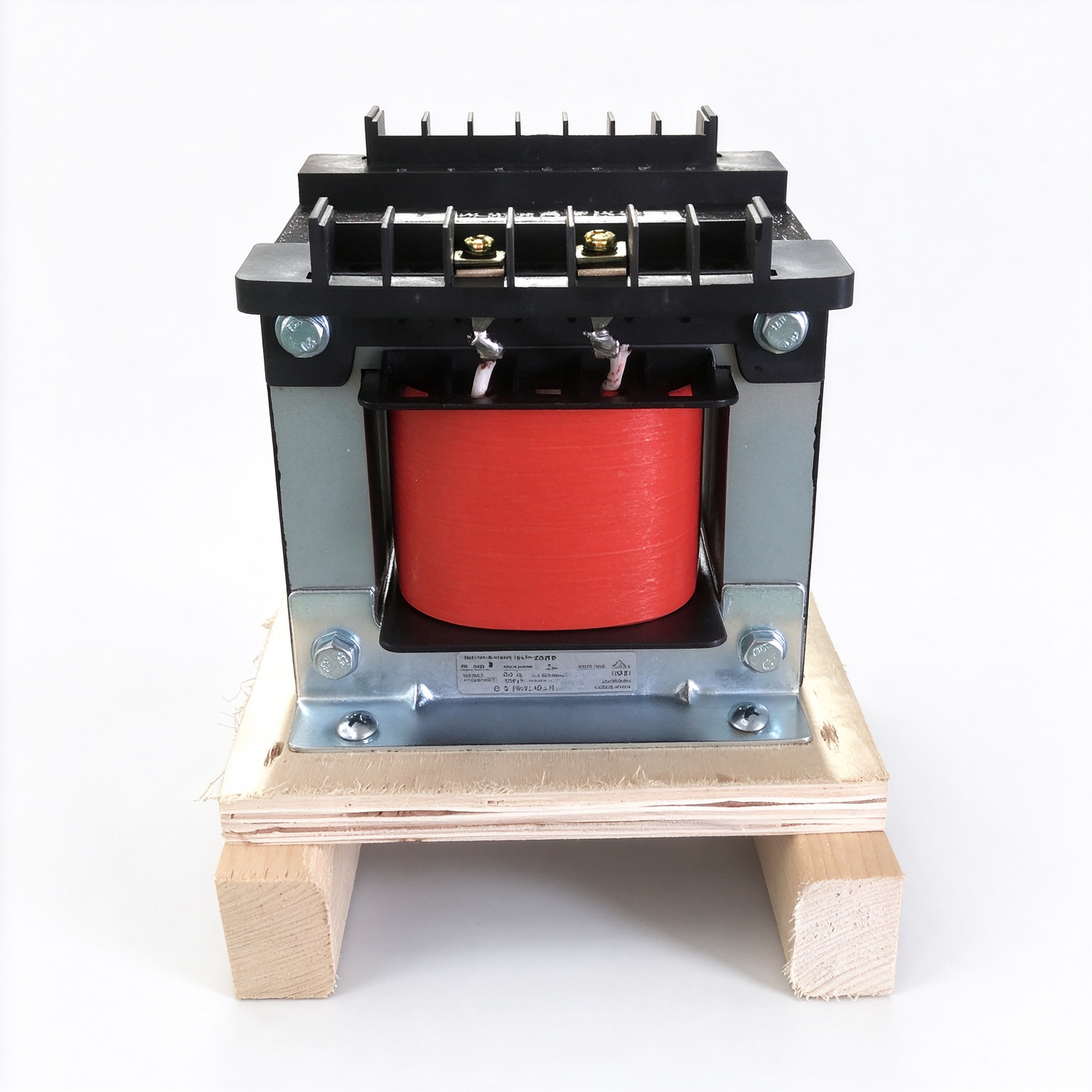
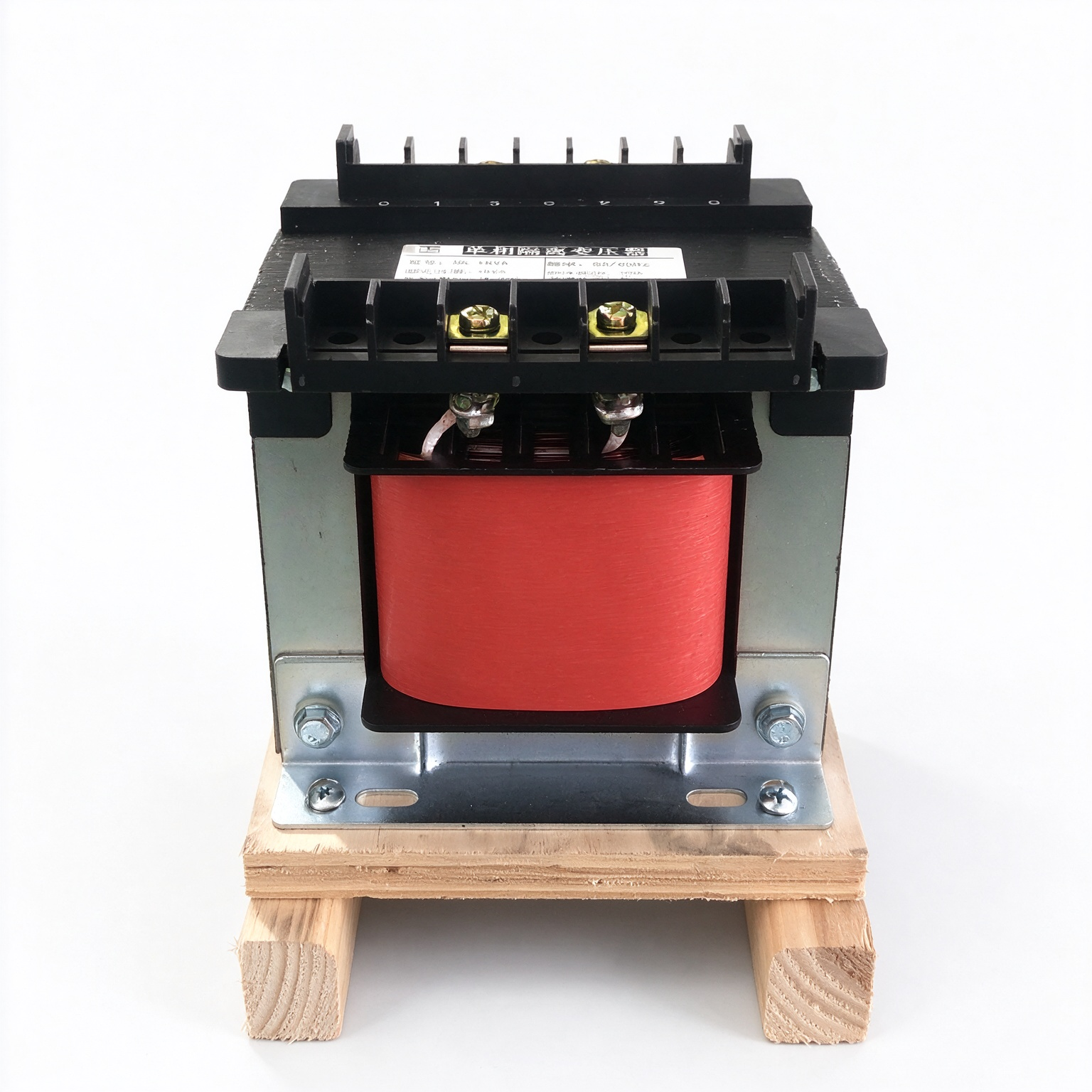
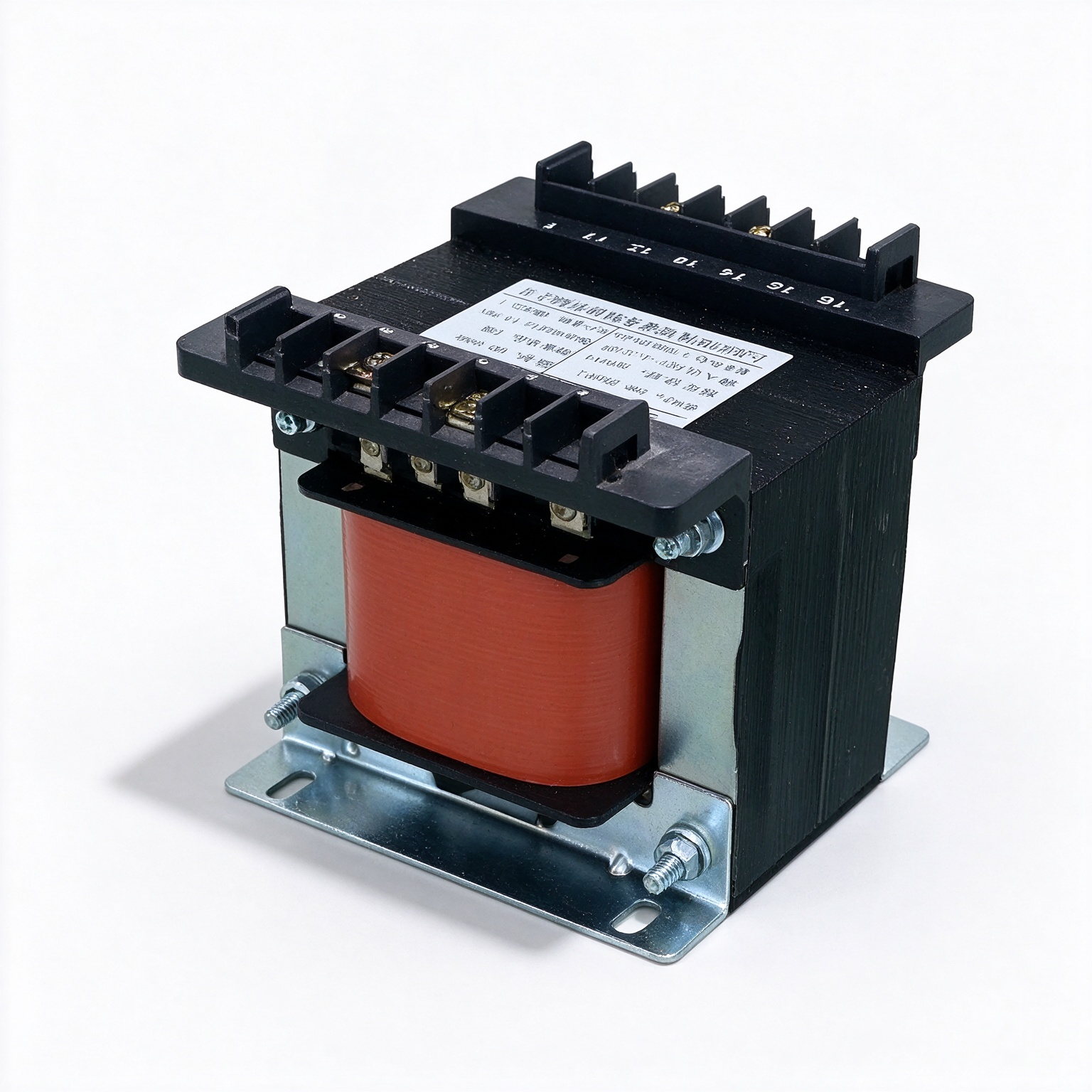
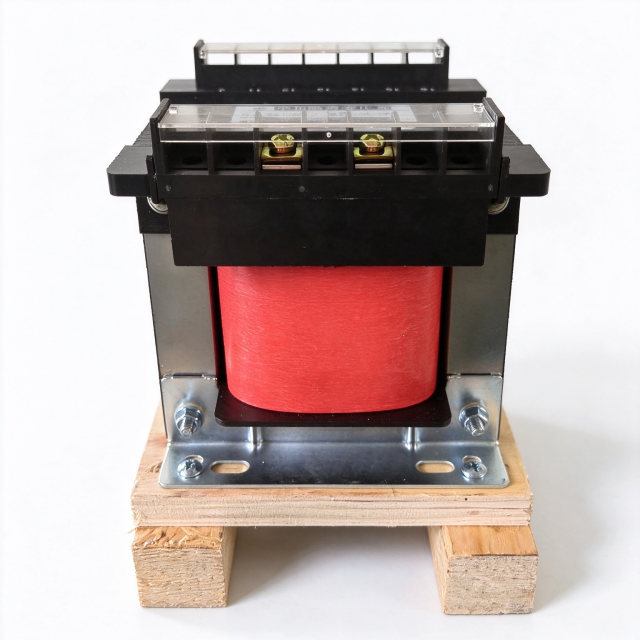
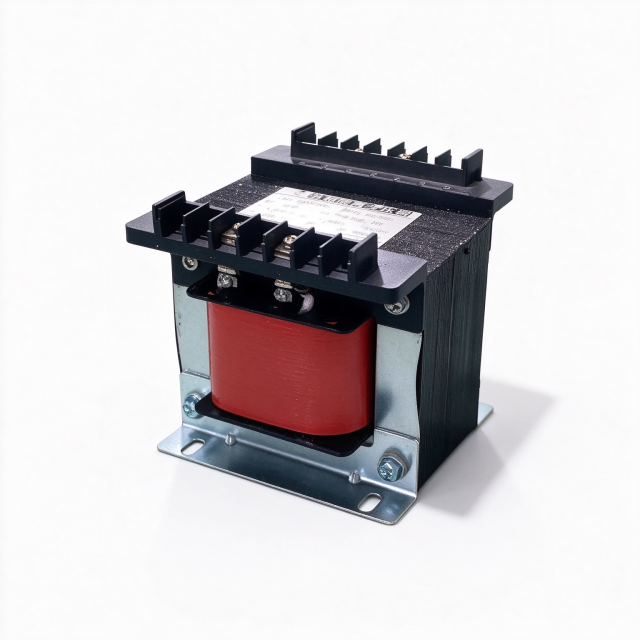
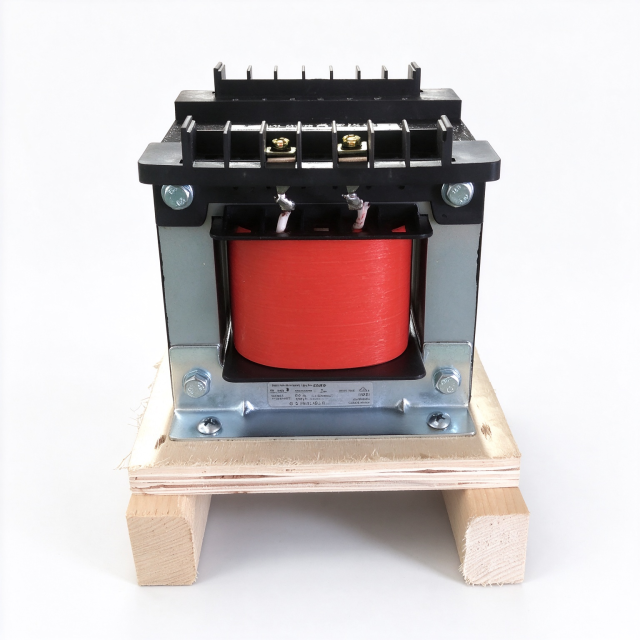
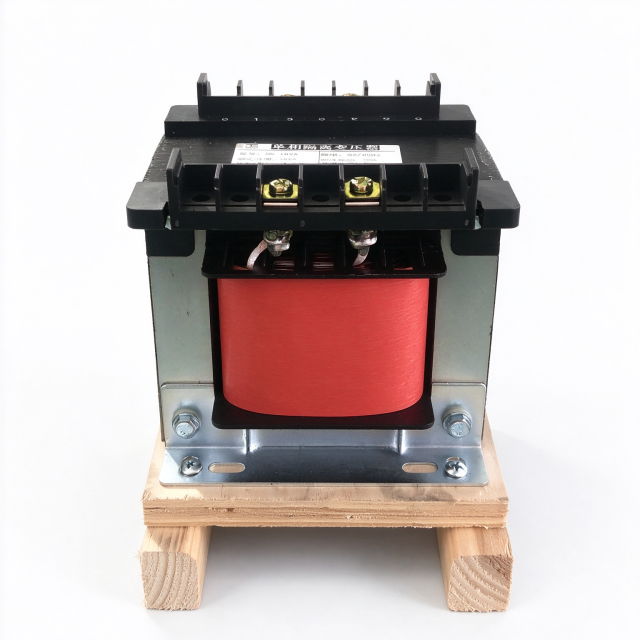
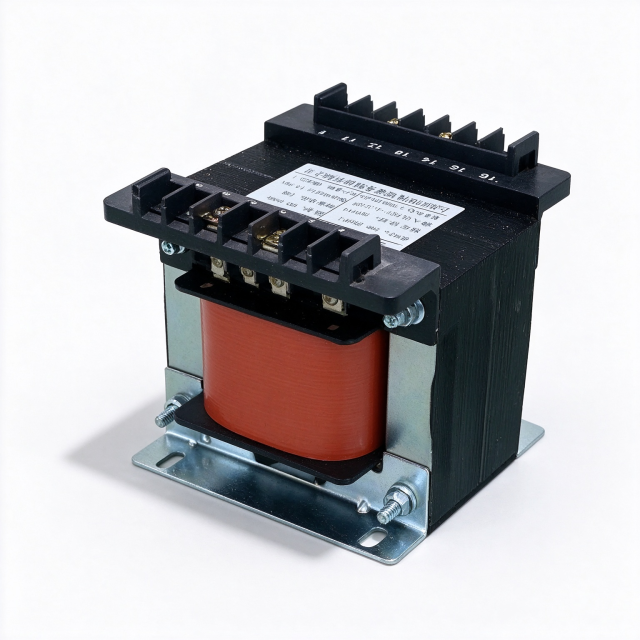
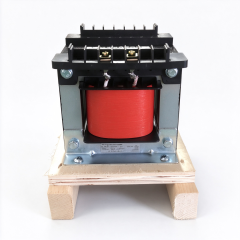
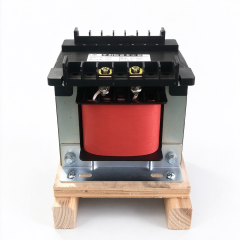
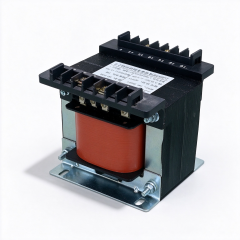
Physically it is a compact block: the coil is wound in red, terminated on black terminal blocks under clear covers, and carried on a metal base with screw terminals. The rating label records the capacity and the input and output voltages the unit was wound for, which is the first thing to read when you are matching a replacement.
It is the kind of control transformer that disappears into a machine tool cabinet and does the quiet work — contactor and relay coils, timers, indicator lamps, the control side of a drive. Panel builders fit it into new panels, maintenance teams order one to replace a failed unit, and OEMs keep the drawing on file so the next machine is wired the same way.
JSD is a control transformer company that winds, assembles and tests in its own plants in Shanghai and Zhejiang.
Isolation & Site Conditions
- Two-winding isolation. A unit wound I,i0 or I,i6 carries separate primary and secondary windings, so the control voltage is not tied to the incoming supply. Fit this where a fault on the control side must not put supply potential onto the panel, or where the control circuit is earthed at another point. State it on the enquiry, because separation is decided by the winding and cannot be added to a finished unit.
- When an autocoupler is enough. If the circuit genuinely does not need separation, the autocoupler connection delivers the same control voltage from a single winding in a smaller, lighter unit. It is a space and cost decision with an electrical consequence, so it belongs on the drawing rather than in a conversation after delivery.
- Test voltage on the enquiry. Give us the dielectric test voltage and the impedance figure you want, since both are settled at the drawing stage. If your inspection file needs insulation-resistance readings, ask for them to be recorded against the unit.
- Altitude. A standard build suits sites below 1000 m; above that we supply a plateau version specified for the altitude you give us. Thinner air carries heat away less effectively, so a unit sized at sea level and then installed on a mountain is not the same transformer in service.
- Heat inside the enclosure. Tell us the temperature you expect around the coil and whether the cabinet is sealed or ventilated. Insulation class is fixed at the drawing stage — class H where the enclosure runs hot, class F for general machine-tool cabinets, class B for mild duty — so the class follows the ambient rather than the ambient being left to follow the class.
- Dust, moisture and finish. The dry-tape build has no oil to check or change, which suits workshops and plant rooms where an oil-filled unit would be unwelcome. Where the atmosphere is dusty or damp, say so when you enquire: terminal covers, surface finish and the enclosure arrangement are chosen for the conditions the unit will actually live in.
- Appearance and enclosure. As a control transformer company, we can customise the build for specific environmental conditions and appearance, so a custom control transformer can come with the enclosure, terminal covers, label wording and mounting arrangement that suit the machine it goes into — useful when the panel is visible to an end customer or the unit has to fit an existing footprint.
- What to put on the enquiry. Isolation or autocoupler, site altitude, expected ambient, sealed or ventilated enclosure, and any appearance or enclosure constraint. Those answers settle most of the specification before we ever discuss windings.
Applications
- Machine tool control circuits. Coil supply for contactors, relays and solenoid valves, with lamps, timers and the control side of a drive fed from the same secondary.
- Control panels and switchgear. The transformer establishes a control voltage that is independent of the incoming supply, so the panel behaves the same whether it is installed on a 380V, 400V or 480V site.
- Machines moving between grids. Equipment built for one supply and installed on another is routine work: a control transformer 480V to 120V on one machine, a 400V to 230V unit on the next, each wound for the equipment it goes into.
- Replacement and retrofit. When the original fails or is obsolete, the label data and the terminal footprint are enough to build a match that drops into the existing wiring.
- OEM and series builds. A machine builder keeps one drawing on file, and ordering against it each time with the same control transformer company is what keeps the tenth machine identical to the first.
- Workshop and test benches. Where a fixed low voltage is needed for bench tools, test rigs or inspection lamps, the same single-phase build covers it.
Specifications
| Property |
Value |
| Type |
control transformer |
| Rated power |
30 VA to 500 KVA |
| Primary voltage |
1 V to 3000 V, wound to order |
| Secondary voltage |
1 V to 3000 V, wound to order |
| Insulation class |
B / F / H |
| Winding material |
Copper or aluminum |
| Core |
Laminated high-permeability silicon steel |
| Cooling |
Dry-tape |
| Winding connection |
I,i0 / I,i0 / I,i6 / autocoupler |
| Work efficiency |
≥ 90% |
| Insulation strength |
> 100 MΩ (DC 500 V) |
| Noise |
≤ 60 dB |
| Dielectric strength and impedance |
Specified to your requirement |
| Standards |
IEC60076, EN 61558-2-4 |
Custom Voltage & Winding Configuration
- Voltage pairing. As control transformer manufacturers, we quote every unit against your input and output. A control transformer 480V to 120V for a machine built to North American practice is as straightforward as a 380V to 220V unit for a European panel, because the winding is set by the ratio you ask for and not by a fixed catalogue list.
- Frame size. Power follows the connected load, not the panel size. This control transformer 500VA frame suits a cabinet carrying a group of contactor coils, lamps and a small control supply; larger frames in the range take over as the switched load grows.
- Insulation class. Class B, F or H is fixed at the drawing stage. Class B covers the mildest duty, F is the usual choice for a general machine-tool cabinet, and H is for enclosures where the ambient runs hot — tell us the temperature you expect inside the cabinet and the class follows.
- Copper or aluminum winding. Copper conducts better, runs cooler and is the heavier, more expensive option; aluminum brings weight and cost down where the budget is tight. The core, the winding and the test routine stay the same either way.
- Winding connection. Choose a two-winding isolating connection (I,i0 or I,i6) when the control circuit must be separated from the supply, or an autocoupler connection where isolation is not needed and a smaller, lighter unit is an advantage.
- Taps. Secondaries are wound to the tap schedule the panel needs — a single output, or several control voltages on one transformer. State the voltage of each tap and the load you expect on it.
- What to send. A drawing is the quickest starting point. Without one, give us the power rating, primary and secondary voltage, mounting space, tap schedule and any site conditions, and the engineering team works the specification back to you from those figures.
Installation & Commissioning
- Read the label against the drawing. Confirm capacity, primary and secondary voltage and frequency before the unit goes anywhere near the panel.
- Mount it rigidly. Bolt the metal base to a flat, rigid surface with room around the coil for air to move; a thin unsupported panel will act as a sounding board and amplify core hum.
- Feed the primary through protection. Take the primary from the appropriate protective device and route control wiring away from power conductors.
- Land and check the terminals. Connect to the screw terminals, confirm the tap links against the drawing, then refit the clear covers.
- Test before energising. Measure insulation resistance and confirm continuity of each winding.
- Energise and record. Measure the secondary voltage on every tap and log it against the drawing, so the next service visit has a reliable record to check against.
- Leave it alone. There is nothing to lubricate or adjust in service. A periodic check of terminal tightness, dust on the core and label legibility is the whole routine.
Related Transformer Range
| Series |
Configuration |
| BK single-phase control transformers |
500VA to 15KVA, 380V or 220V in and 12V, 24V or 36V out |
| ABK-500VA furnace transformer |
380V or 220V in and 50V, 36V, 24V, 12V or 10V out |
| Single-phase low-voltage high-current units |
380V or 220V in and 36V to 70V out for silicon molybdenum and silicon carbide rod heating |
| Three-phase low-voltage heating transformers |
up to 100KVA, 380V in and 8V to 60V out |
| SBK three-phase isolation transformers |
5KVA to 500KVA, 380V to 480V in and 100V to 400V out |
| SG three-phase isolation and step-up units |
5KVA to 800KVA, 380V to 690V in and 100V to 230V out |
| Oil-immersed step-up transformers |
500KVA class for tunnel and mine supplies |
Ordering & Delivery
- Send your requirement. Because we are control transformer manufacturers and not a trading desk, your drawing goes straight to the engineering team that will wind the unit. Orders start from 1 set, so a single trial unit and a repeat production run follow the same route.
- Get the quotation. A complete enquiry — voltages, rating, tap schedule, site conditions — usually comes back as a detailed quotation within 24 hours, including the winding we propose.
- Confirm the drawing and the terms. Payment is by TT, Digital Payment, ACH, SEPA, SWIFT, Alipay, WeChat Pay or Prepaid Card, and winding starts once the drawing is approved.
- Production. Allow 3 to 25 working days, depending on the order quantity and the complexity of the customization.
- Packing and dispatch. Units travel in international wooden cases, or according to the actual transport needs of the route.
- Warranty. Every unit carries a minimum 12-month warranty, with extended warranty options available depending on project requirements.
- Talk to us. Email JSD@jsd-voltagetransformer.com or message +86 135 1660 7609 on WhatsApp and you reach the team handling your order.
Technical Support & Model Matching
Because we build in our own factory, the engineers who answer your questions are the same people who configure the units on the line. Send us your input and output voltages, load, frequency and site conditions, and we will match the right model or design a custom unit to suit. Our team stays with you from first enquiry through installation and commissioning, helps trace faults, and specifies spare or replacement units for equipment already in service. Twenty years of manufacturing know-how sits behind that support, so the technical answer comes with a build you can rely on.
Every custom control transformer starts with the core. Laminations of high-permeability silicon steel are stacked and clamped into a rigid block, which is what keeps losses low, keeps the unit cool inside a closed cabinet and keeps the noise down to a hum rather than a buzz. The windings are copper or aluminum depending on the build, wound, insulated and terminated in our own workshop. We are control transformer manufacturers rather than assemblers of bought-in parts. Nothing in the magnetic circuit is subcontracted, so the coil that goes into the core is the one our own winders made and tested. Inspection is 100%, not sampled. Eight dedicated checkpoints run from raw material warehousing through winding, core assembly, terminal and label accuracy and electrical testing to the finished-product dispatch check, so a unit leaves with its rated voltages and its insulation strength intact rather than close enough. More than 20 years of building low-voltage transformers and voltage stabilizers sits behind that routine, and it shows in repeat business: panel builders who took a first unit into a series machine come back for the next batch, and units sent to construction sites have passed inspection on arrival.
FAQ
Is a control transformer 500VA rating enough for my control circuit?
Work from the load, not the panel size. Add up the sealed VA of every device fed from the secondary — contactor coils, relay coils, timers, lamps and any small power supply — and treat motors and their inrush separately. A cabinet with a handful of contactors and indicator lamps usually sits comfortably inside 500VA; if the total comes close to the rating, or you expect to add devices later, step up a frame. Send the device list with its coil voltages and we will confirm the rating in writing.
Can the secondary be wound with several taps, such as 12V, 24V and 36V?
Yes. The secondary of a custom control transformer is wound to the tap schedule you supply, so one unit can deliver several control voltages to the same panel. State the voltage of each tap and the load you expect on it, and we will confirm the winding and the terminal arrangement before production.
Does this transformer run on both 50 Hz and 60 Hz supplies?
Both. Units are built for 50/60 Hz, and the frequency you will actually run on should be stated on the enquiry so the winding is confirmed against it. This matters most when a machine design is copied between regions and the drawings still show the original supply.
How much noise will it make inside a closed cabinet?
The rated level is 60 dB or lower. Most of what you hear from a transformer comes from the core, so the laminations are high-permeability silicon steel, stacked and clamped tight into a rigid block. Mounting has as much to do with it as the build: bolt the metal base onto a rigid surface, keep the bolts tight, and avoid a thin unsupported panel that will act as a sounding board.
Can it be used at high altitude or in a hot workshop?
Yes, when the transformer is specified for the site. Altitude and the heat inside the enclosure both affect how the unit is built, so tell us where it will be installed and what the cabinet is like, and the build is matched to those conditions instead of going out as a standard unit.
Is the secondary isolated from the supply?
It can be either way. Specify a two-winding isolating connection (I,i0 or I,i6) when the control circuit has to be separated from the supply, or an autocoupler connection when isolation is not required and a smaller, lighter unit suits the panel. Tell us which your circuit needs at the enquiry stage, because it changes the winding, not just the label.
My machine needs 120V control but the plant supply is 480V — can you build that?
Yes. A control transformer 480V to 120V is a normal build, and the primary can be tapped for 440V or 415V sites if the same machine ships to more than one region. Give us the secondary load and any additional control voltages the panel needs, and we will set the tap schedule on the drawing.